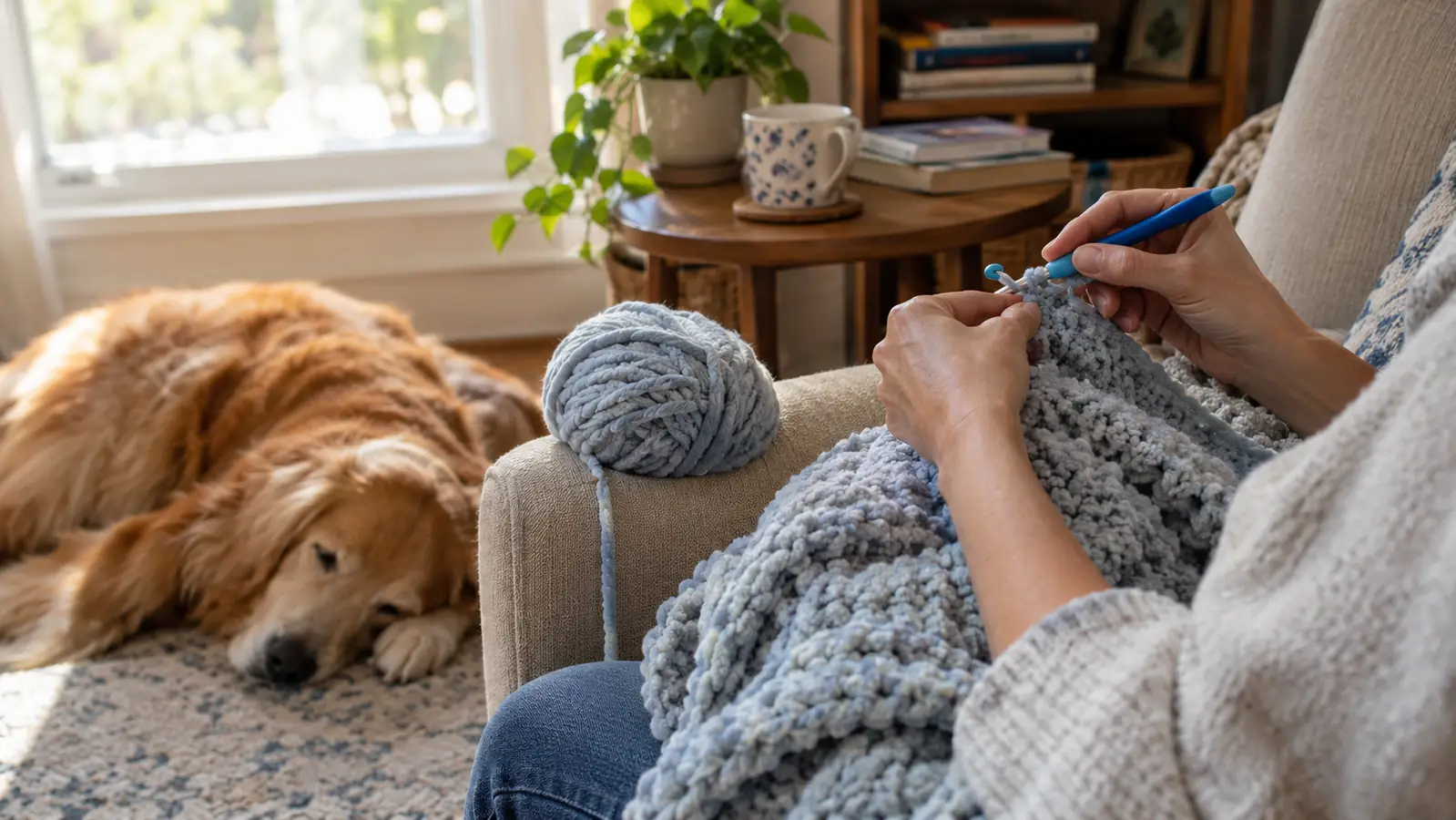
If your hands ache after twenty minutes of crocheting, you have probably tried the obvious fixes. You switched to a softer yarn, you took more breaks, you told yourself to loosen your grip. I tried all of that too, and none of it solved the real problem, which was the hook in my hand. The Yarniss 20-size ergonomic set is what finally let me finish an afghan without my right thumb throbbing.
A quick note before I get into the list. I am not a doctor, and I do not give medical advice. If your hand pain does not go away when you stop crocheting, please see a doctor or a hand therapist. But if the ache shows up while you work and fades when you rest, the hook itself is worth a hard look. These are the ten reasons I stopped using metal hooks and have not looked back.
The set that let my thumb rest for the first time in months
If your hands ache while you crochet, the hook is the first thing I would change. The Yarniss set covers every yarn weight I use, and the handles are kind to an arthritic thumb joint.
Amazon Check Today's Price on Amazon →A wider, softer grip spreads pressure off your thumb joint
With a plain metal hook, every bit of pressure lands on the exact spots where you grip. For me that is the base of my right thumb, where mild arthritis has lived for a few years. The Yarniss hooks spread that pressure across a wider, softer handle, so my palm and fingers share the work instead of one aching spot taking it all. I felt the difference within the first week, and the dull ache that used to show up by row twenty stopped showing up at all. I stopped dreading the third row of a new project, and that changed everything about my evenings.
Twenty sizes means the right hook is always there
For years I made do with four or five hooks. When the nearest size was a little small for the yarn, I gripped harder and told myself it was fine. This set runs from 0.5mm to 10mm, which covers thread, fingering, worsted, and bulky yarn. When the hook actually matches the yarn, your hand does less work, your stitches look better, and you stop fighting your own supplies. I keep the whole set in a basket beside my chair, so when a pattern calls for a size I barely use, it is still right there.
You can hold the hook lightly instead of death-gripping it
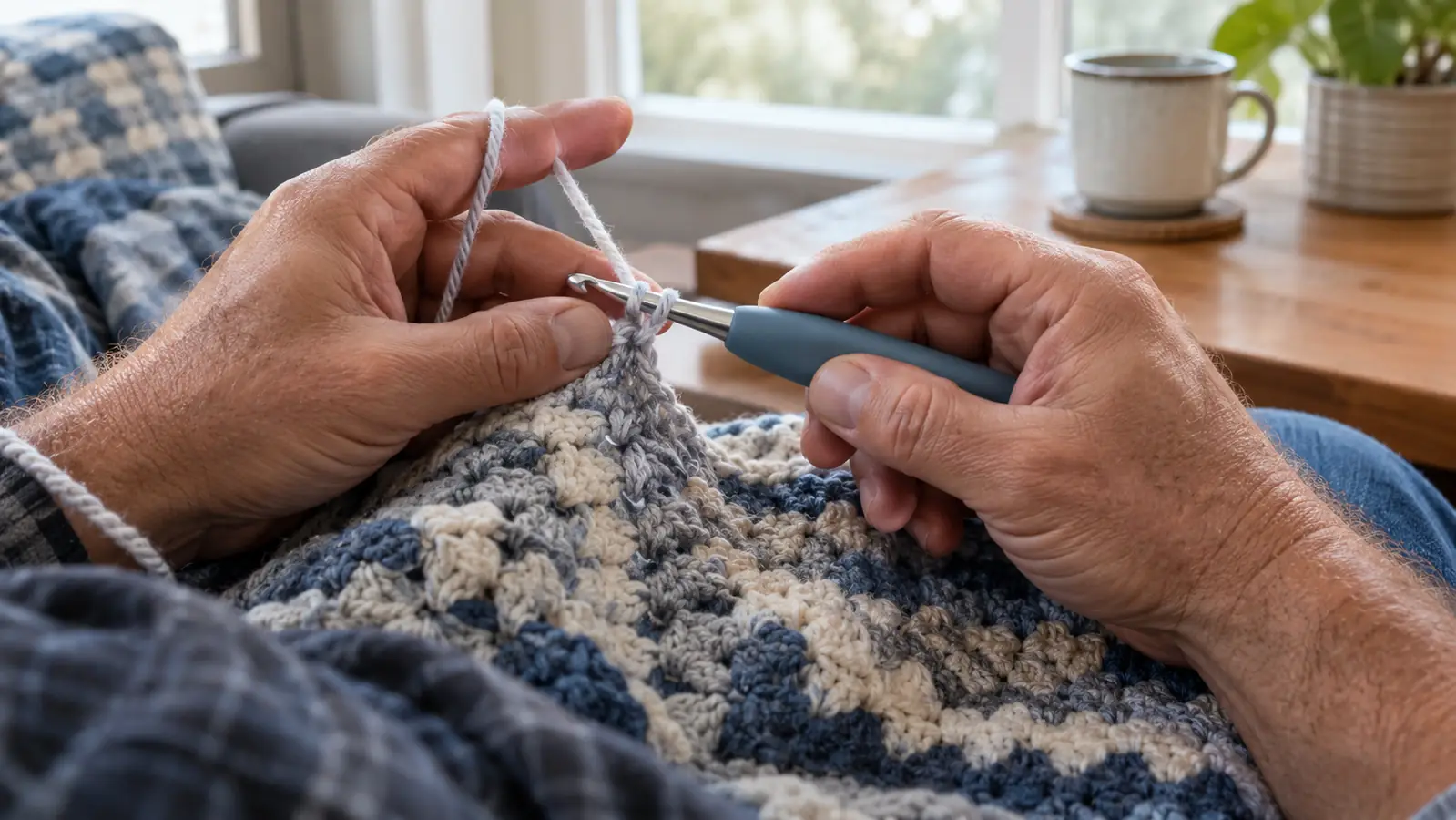
Smooth metal hooks slip, so I squeezed them to keep them from twisting. The Yarniss grip is soft enough and tacky enough that the hook stays put with a light hold. A loose grip means my hand and forearm stay relaxed, and a relaxed hand does not cramp after half an hour. It sounds like a small thing, but it changes the whole feel of an evening of crocheting.
Longer sessions, and that is how blankets actually get finished
I have a closet full of half-done afghans that I abandoned because my hand gave out first. With these hooks I can sit in my armchair by the window and work for a full evening, the way I used to before my thumb started complaining. The throw blanket I finished last spring had been sitting in a bag for two years. That alone made the set worth it to me.
One set covers everything from thread to bulky yarn
I crochet dishcloths out of cotton, amigurumi out of worsted, and afghans out of whatever bulky yarn is on sale. The same set handles all of it, which means I never reach for a painful old hook because my good hooks only came in a few sizes. Having the full range in reach also means I try new yarn weights instead of sticking to what I know. My dishcloths come out flatter, my amigurumi comes out tighter, and my afghan gauge is steadier because I am not forcing one hook to do every job.
Amigurumi stops hurting my hands after an hour
Tight stitches and small hooks are brutal on arthritic hands, and I used to dread the last few rounds of a stuffed animal. The smaller hooks in this set are easier to hold than the thin metal ones I used before, and I can finish a little bear or bunny in one sitting. My grandnieces get more gifts now, and my hands do not punish me for it the next day.
All twenty hooks stay in one place, not lost in the couch
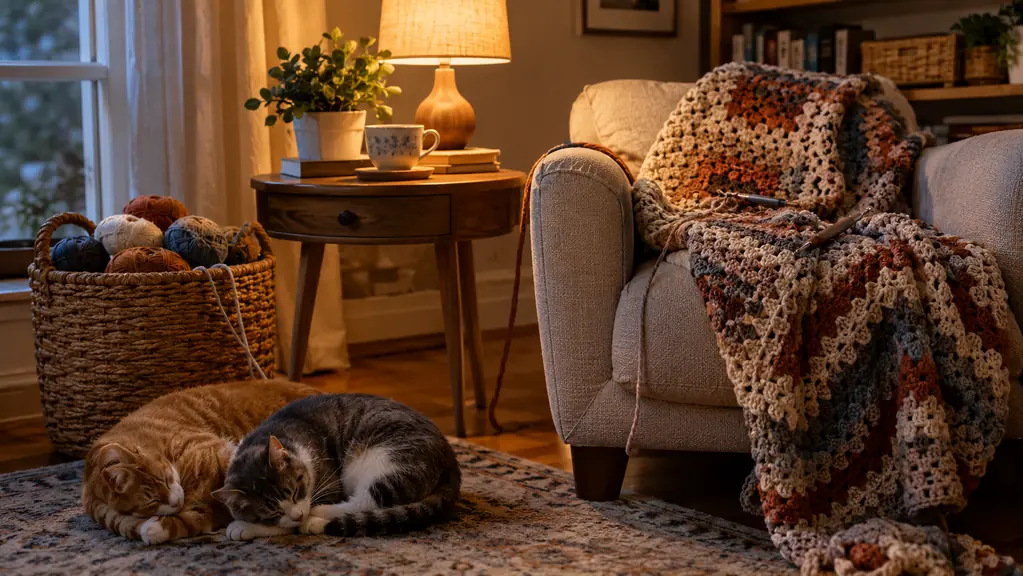
I used to lose hooks between the cushion and the armrest constantly, and my cats, Romeo and Juliette, love to bat anything shiny under the furniture. Keeping the full set together in one spot beside my chair means I always know where the 5mm is. It sounds boring, but not hunting for a hook keeps me in the rhythm of a project. It also shows me at a glance which sizes I reach for most, which told me what to buy when I wanted a single backup hook for my travel bag.
Changing hooks mid-project is no longer a chore
Patterns that call for two or three different sizes used to annoy me so much that I would pick one hook and make do. Now I just reach for the right one. Being willing to switch hooks has made my gauge more consistent, which means the blanket squares actually match when I sew them together. My finished pieces look better because I finally use the right tool for each step. I used to avoid patterns that asked for multiple hook sizes, which ruled out some lovely shawls. Now the hook list is the first thing I read, and it does not scare me off.
My hands feel better the next morning, not worse
This is the test that matters to me. With metal hooks, a long evening meant a stiff, sore thumb the next morning. With the Yarniss set, I wake up and my hands feel normal. My arthritis has not gone anywhere, and I am not giving medical advice here. But the difference in how my hands feel after a night of crocheting is the reason I have not picked up an old hook since.
Crocheting feels like rest again, not a workout
There was a stretch where I dreaded sitting down with my yarn because I knew my hand would start aching. Now the evening session is the part of my day I look forward to, with Stormy asleep on the rug beside my chair and a project that actually progresses. If you are crocheting through hand pain, you do not have to quit. You may just need a hook that works with your hands instead of against them.
What I'd Skip
These hooks are not for everyone, and I would not want you to buy them on my word alone. If you already own a set of ergonomic hooks you love, keep them. If your hand pain lingers after you set the hook down, please talk to a doctor or hand therapist before you buy anything. And if you only ever work in one yarn weight, a single ergonomic hook in your usual size may be all you need. They also took me about a week to get used to, because the grip is thicker than a plain metal hook. If that thicker feel bothers you, this set is probably not your answer.
I went from setting the hook down after twenty minutes to crocheting for two hours in the evening, and my thumb stopped aching the next morning.
Try the hook that works with your hands, not against them
You do not have to quit crocheting because your hand hurts. A softer grip and the right size for your yarn can turn a painful session back into a restful one. It did for me, and it is worth trying before you give up on a project you love.
Amazon Check Today's Price on Amazon →