Here is what thirty years of crocheting in a small brick house outside Baton Rouge has taught me: the hook in your hand matters more than the pattern, more than the yarn, more than anything else in the basket. I spent most of those years using plain metal hooks, the kind that come in a vinyl case and sit in every craft drawer in America. Then my right thumb started to complain. Mild arthritis, the doctor said, and a crocheter hears that the way a carpenter hears about a bad hammer. So I bought a set of Yarniss ergonomic crochet hooks, the ones with the cushioned handles made for arthritic hands, and I worked through two afghans, a pile of dishcloths, and one very small amigurumi cat with them. This is the comparison I wish I had read before I spent those years gripping bare metal.
The short answer is this: the Yarniss hooks are easier on my hands, and the plain metal hooks are still faster in my hands. Neither one is the right answer for everyone. If your hands ache after an hour of crocheting, you already know which problem matters more to you. Here is the honest breakdown, hook by hook, after a month of evening sessions in my armchair by the window.
How I Compared Them
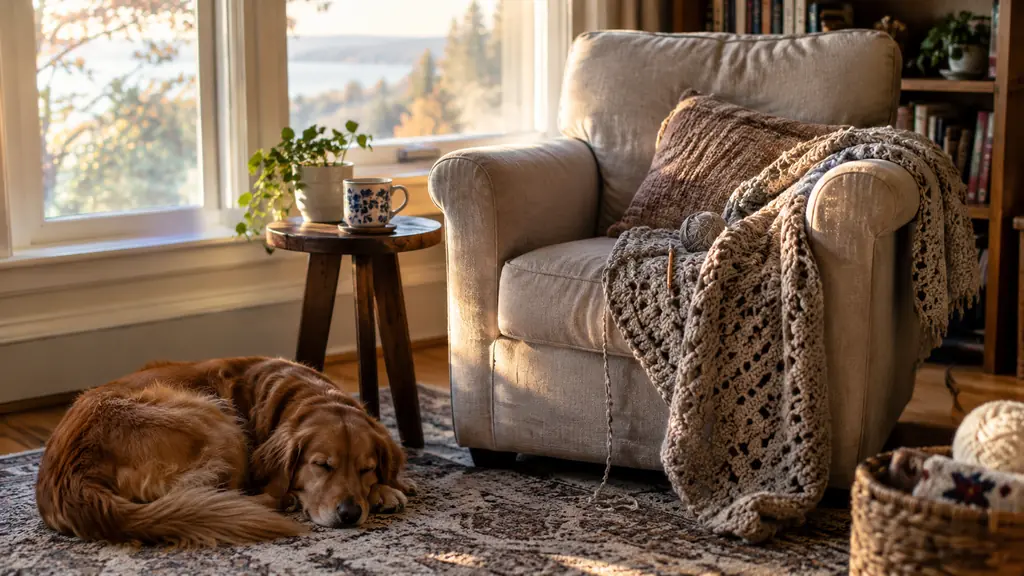
I did this the slow way, the way I do everything with my hands. For three weeks I crocheted every evening in my usual spot, the armchair by the living room window with the side table holding my mug and my notebook. I used the Yarniss set for one project and my old metal hooks for another, then switched them the next week so no project got the advantage of a fresh pattern. I wrote down how my thumb felt at the end of each session, whether I had to stop early, and which hook I reached for when I was tired and the light was going.
The projects mattered as much as the hooks. A dishcloth is row after row of the same stitch, which is the fastest way to test how smoothly yarn moves over the shaft. A shell-pattern afghan tests the hook when you are constantly counting and recounting. And amigurumi tests grip, because the tension is tight and you hold the hook harder than you should. I also paid attention to the dull details that decide whether a hook gets used or buried: how easy the size markings were to read in lamplight, whether the hook rolled off the side table, and how my wrist felt the next morning.
I should mention the household conditions, because they are part of the test. Stormy, my Afghan hound, sheds long silky hair that finds its way into everything, so I keep finished pieces in a basket with a lid. Romeo and Juliette, my two cats, are four years old and believe every strand of yarn is a personal invitation. That means hooks get put away between sessions no matter which set I am using. A hook that has to survive being picked up and set down a dozen times a night needs to feel good the moment it is back in my hand.
| Yarniss Ergonomic Hooks | Plain Metal Hooks | |
|---|---|---|
| Handle comfort | Cushioned grip spreads pressure across the palm and eases the thumb joint | No cushioning; all pressure lands on your fingers and thumb |
| Yarn glide | Smooth shaft, but the grip adds a little drag near your fingers | The slickest surface around; yarn flies over the shaft |
| Grip on warm hands | Soft handle stays put even when your hands are damp | Bare metal gets slippery fast |
| Weight | The cushioned handle adds weight you feel by hour three | Featherlight; your wrist does less lifting |
| Size markings | Printed on the handle, easy to read at a glance | Stamped on the neck and can wear away over years |
| Learning curve | Thicker handle takes a few sessions to get used to | No adjustment; it feels like every hook you have ever used |
| Best for | Long evenings, aching hands, amigurumi that needs a firm grip | Quick projects, travel, crocheters who love the feel of metal |
I have put the two side by side in the table below, and I want to be clear about one thing: I did not go looking for a winner. I went looking for the hook that lets me finish projects without hurting, and the table just reflects what my hands reported back. Your hands may report something different.
Where Yarniss Wins
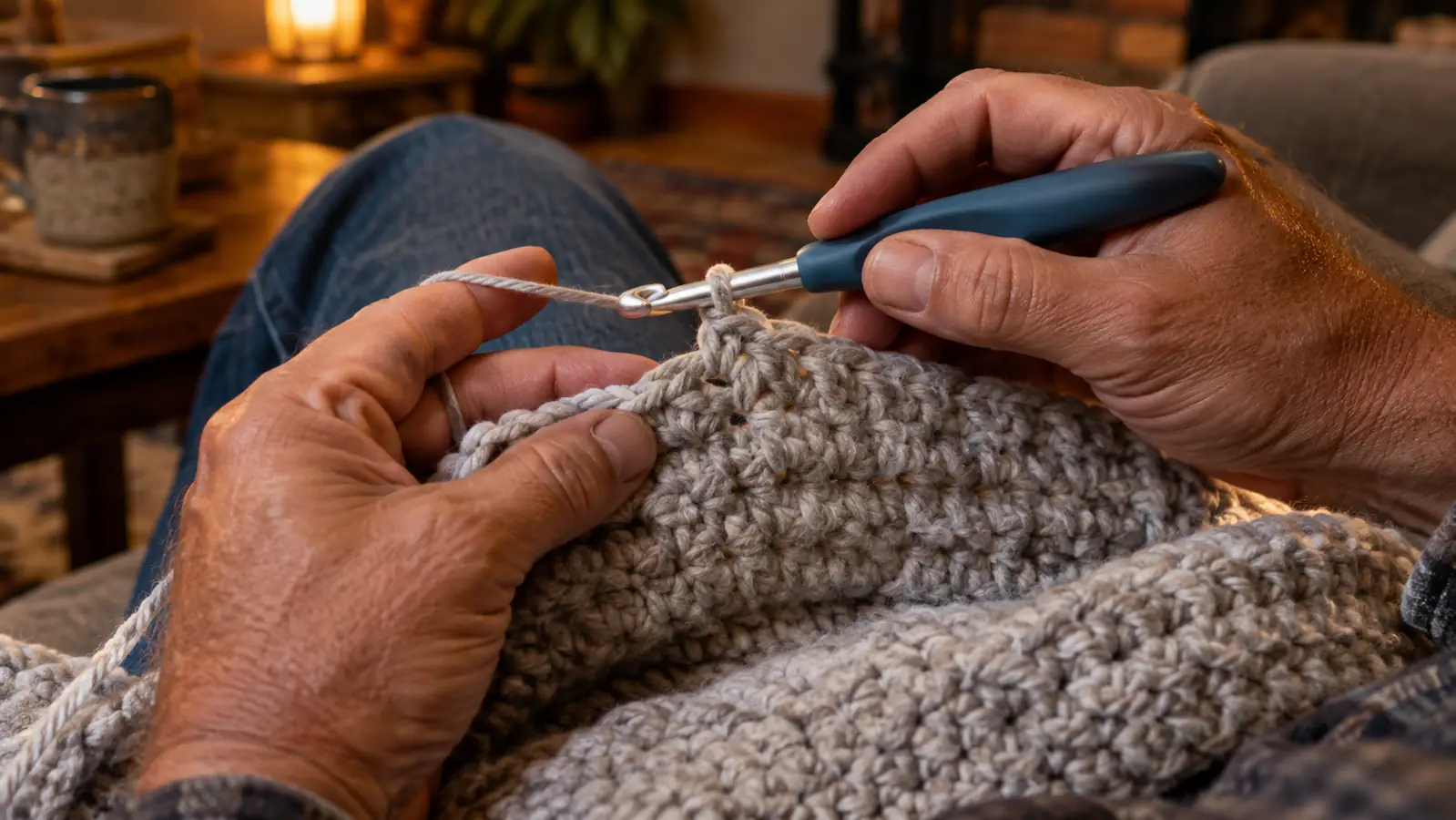
The first thing I noticed was the handle, and it is the reason I kept going back to the Yarniss hooks. A plain metal hook is a skinny stick, and every bit of grip pressure lands on the same two spots, your thumb and your index finger. That is exactly where my arthritis lives. The Yarniss handle spreads that pressure across the palm, so no single joint carries the whole load. After an evening of crocheting, my thumb felt like a thumb instead of a bruised hinge. That is not a small thing at fifty-eight, when you plan to keep crocheting for another thirty years.
The grip surprised me too. Baton Rouge summers mean my hands get warm, and a warm hand makes bare metal slick. I found myself re-gripping my old hooks every few minutes on humid nights. The Yarniss handles stay put even when my hands are damp, and that steadiness let me crochet longer without thinking about it. If you have ever had a hook twist in your hand mid-stitch, you know exactly what I mean.
The third win is the one I did not expect: the size markings. My old metal hooks have their sizes stamped on the neck, and after years of use some of those stamps have worn down to ghosts. I spent more time than I care to admit squinting at a hook to tell a 5.5 from a 6. The Yarniss hooks have the sizes printed on the handles, easy to read at a glance, and because the whole set shares the same handle shape, switching sizes mid-project feels identical in my hand. That consistency matters when you are three hours into an afghan and do not want to think about the tool at all.
One more thing about the handles: they worked for both of the ways crocheters hold hooks. I hold mine like a pencil, and my friend at the yarn circle holds hers like a knife, and we both found the Yarniss handle comfortable without forcing a new grip on us. That is harder to pull off than it sounds. A handle that only suited one grip style would have been useless to half the people I know.
Where Plain Metal Hooks Win
Now the part I did not want to admit, because I like the Yarniss hooks and I wanted them to win everything. Metal is faster. The shaft of a plain metal hook is about as slick as a surface can get, and yarn slides over it with almost no drag. When I was working on dishcloths, nothing but row after row of the same stitch, the metal hook let me keep a rhythm the Yarniss hook could not match. The cushioned handle is wonderful for my thumb, but it sits close to the shaft, and that little bit of soft grip near my fingers slows the yarn down a hair. On a big afghan with hundreds of stitches in a row, a hair adds up over the evening.
Metal hooks are also lighter, and lightness is its own kind of comfort. The Yarniss handle is substantial, and by the third hour I could feel that extra weight in my wrist. Some nights I switched back to metal just to give my wrist a break, and my thumb paid for it the next day. There is no free lunch here, and anyone who says otherwise is selling something.
There is also the feel of the thing, which is harder to explain than the weight. Thirty years of metal hooks trained my hands to expect a thin, direct tool. The thicker Yarniss handle took me a few sessions to get used to, and at first I held it too tightly, the way you grip a new pen. A friend at my yarn circle tried one Yarniss hook for ten minutes and handed it back. She likes the click of metal and the way she can feel the stitch open under the hook tip. That is a real preference, not a flaw in the Yarniss design. If you love the feel of metal, no cushioned handle in the world will talk you out of it.
For aching hands, the Yarniss set is the one I reach for now
I compared them hook by hook over a month of evening crocheting. If your thumb complains after the first hour, this is the set to try.
Amazon Check Today's Price on Amazon →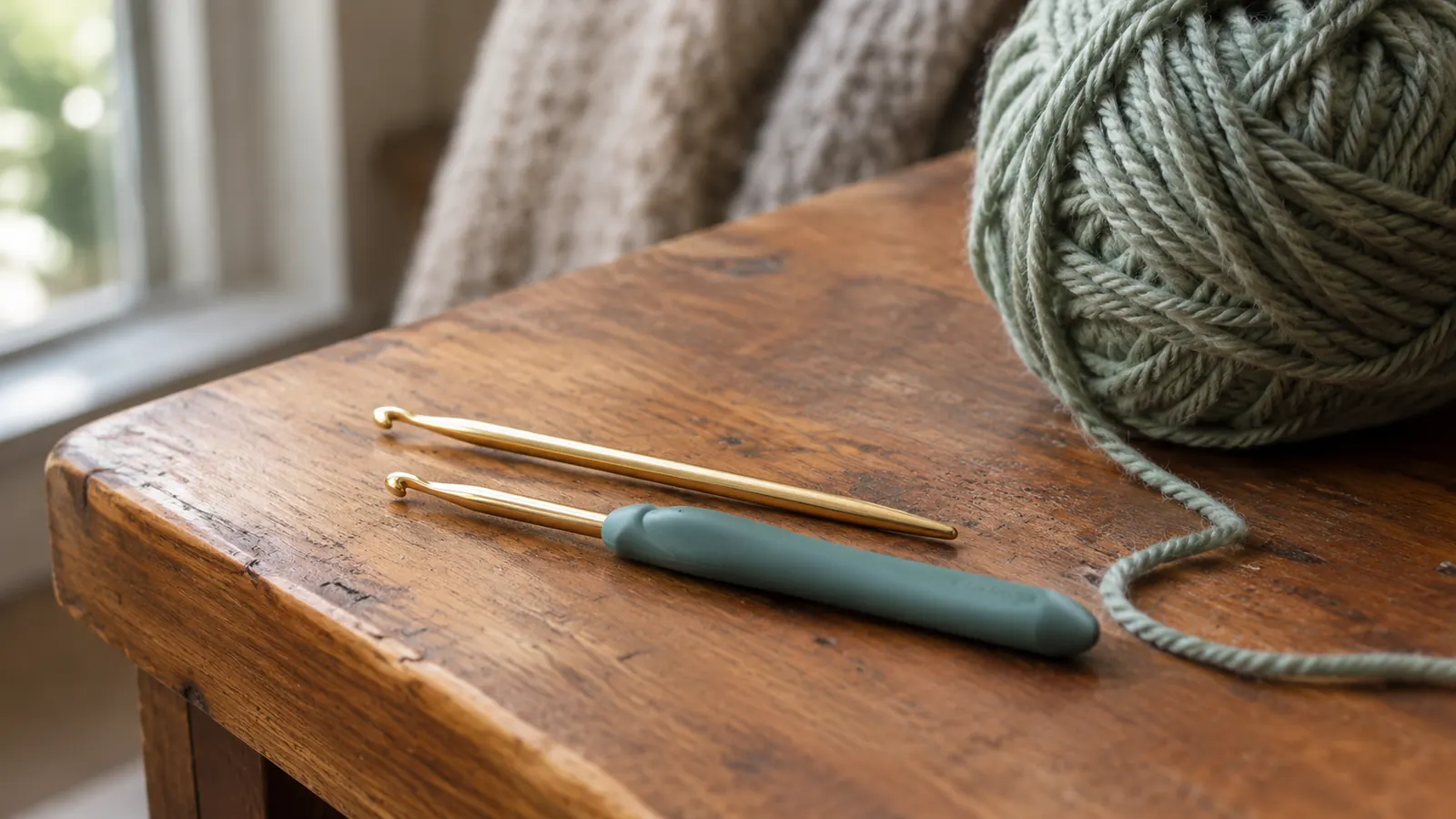
Who Should Buy Which
Buy the Yarniss set if your hands ache after an hour of crocheting, if you have arthritis in your thumb or wrist, if you crochet in long evening stretches, or if you are new to crochet and your grip is tighter than it needs to be. A cushioned handle forgives a death grip in a way bare metal never will, and it gives a beginner one less thing to fight while learning tension.
Buy plain metal hooks if you crochet fast and loose, if your hands never bother you, if you love the thin direct feel of a bare hook, or if you mostly make small projects in short bursts. For quick dishcloths and granny squares, I still grab a metal hook without thinking about it. It is not that one hook is better than the other. It is that your hands get to decide.
For me, the honest answer is that I keep both. The Yarniss hooks live in the basket by my armchair for evening afghan work, and a couple of metal hooks sit in the travel case for the times I crochet while waiting at appointments or watching the light fade. Stormy curls up on the rug nearby and leaves my hooks alone, but Juliette has no such manners, so hooks go back in the basket either way.
One more thing, and I mean it kindly. If your hand pain does not ease up after a few weeks of a softer hook, please see a doctor or a hand therapist. I am not a medical professional, and I do not want anyone to treat a crochet hook as medicine. It is a tool. A good tool, but a tool.
The Bottom Line
If I had to choose one set and give the other away, I would keep the Yarniss hooks. My thumb is the reason I still get to crochet at all, and a hook that lets me work for two hours without pain is worth more to me than a slightly faster stitch. But I would not pretend the metal hooks have nothing going for them. They are lighter, slicker, and faster, and if your hands do not hurt, you may not notice enough of a difference to switch.
I know some crocheters will read this and decide the Yarniss hooks are too different from what they are used to. I felt the same way for the first two evenings, and then I stopped noticing the handle and started noticing that my thumb was not complaining. That is the whole argument, right there.
If you are unsure, buy a single Yarniss hook in the size you use most and crochet one dishcloth with it. That is what I would tell anyone sitting in my living room with a mug of tea and a lapful of yarn. You will know within one evening whether the cushioned handle is for you, and you will not have spent a fortune to find out.
The Yarniss set is the one I reach for on aching evenings
Twenty sizes from 0.5mm to 10mm, one comfortable handle, and over 28,000 reviews at 4.7 stars. If your hands are tired of metal, this is where I would start.
Amazon Check Today's Price on Amazon →