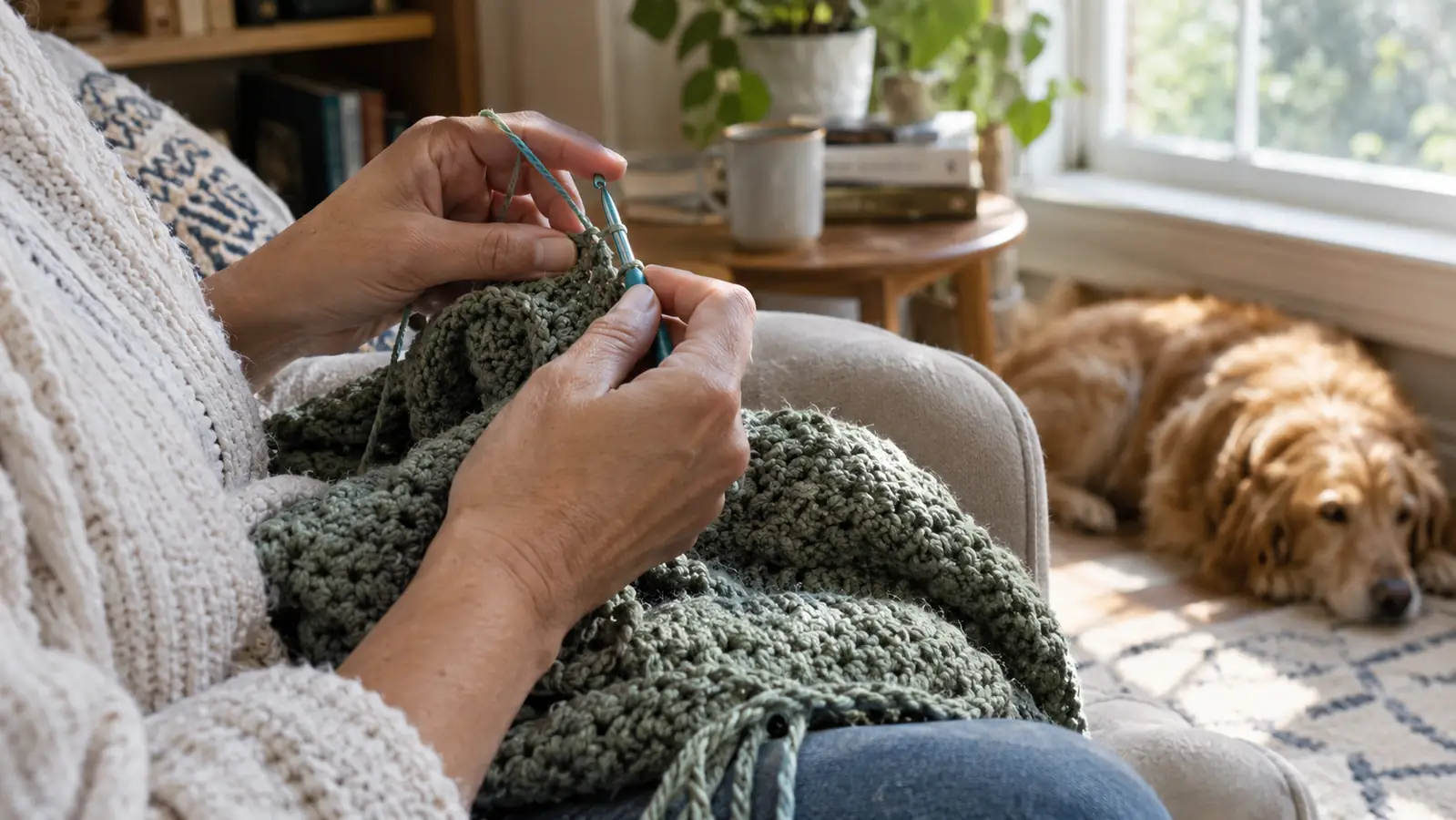
For about 30 years I have crocheted in the same spot: an armchair by the living room window in my small brick house outside Baton Rouge, with my Afghan hound Stormy on the floor and my two cats, Romeo and Juliette, watching the yarn like it is their job. Somewhere in year 28, my right thumb started complaining. Mild arthritis in the thumb joint, the doctor said, and it got loud whenever I held a thin metal hook for a few hours. I tried pencil grips, I tried wrapping hooks in tape, I tried switching to bulkier yarn so I could use a bigger hook. All of it helped a little. Then I ordered the Yarniss 20 Size Crochet Hooks set and spent the next several months working through afghans, throws, and a pile of gift dishcloths with it. This review is what those months taught me.
I want to be clear about one thing up front: I am not a doctor and I am not giving medical advice. If your hands hurt badly enough that you dread picking up a hook, please see a doctor or a hand therapist. What I can tell you is how these hooks felt in my own hand, night after night, on a 58-year-old woman with mild arthritis and a stubborn streak.
The Quick Verdict
If sore thumbs and stiff fingers are cutting your crochet sessions short, the Yarniss set gives you a soft, cushioned grip in every size you will actually use, at a price that makes it easy to try. It is not a medical device and it will not fix an injured hand, but for everyday comfort it earned a permanent place in my side table drawer.
Amazon Check Today's Price →Give Your Thumb a Break Without Giving Up the Hook
The Yarniss ergonomic hook set has 20 sizes from 0.5mm to 10mm, so you can switch from lace-weight to bulky yarn without changing your grip. It is the set I reach for almost every evening now.
Amazon Check Today's Price on Amazon →How I've Used It
I have used these Yarniss hooks for about six months, mostly in the evenings after dinner. My usual projects are afghans and throw blankets, so most of my work is worsted weight and bulky yarn, which means I live in the middle sizes: 5.0mm, 5.5mm, and 6.0mm. I have also used the smaller hooks for amigurumi and the larger ones for a chunky blanket I made for my niece. The first big project I finished with them was a throw for my niece, 48 inches by 60 inches, worked in half double crochet with worsted weight yarn. I started it on a Tuesday in early September and finished it three weeks later, and the whole time I never once had to stop because my thumb was screaming. That had never happened before on a project that size.
My typical session is an hour or two, sometimes longer when Stormy is asleep and the cats have given up on the yarn. On a good night, like the evening I finished the border on my niece's throw, I sat for almost three hours without getting up. Before this set, an hour with a plain aluminum hook left my thumb aching and my grip tight. With the Yarniss hooks, the difference showed up within the first week: my hand still got tired on long evenings, but the sharp, achy edge was gone. That is the honest version. These hooks do not make your hand immune to fatigue. They remove the pinch points that made the fatigue arrive early and stay late.
I also used them for shorter, fiddly projects: a dozen dishcloths as Christmas gifts, a few small amigurumi animals, and a baby hat for a coworker's granddaughter. The dishcloths were all the same pattern, worked in cotton yarn with the 4.0mm hook, and I made them two or three at a time in front of the television. The amigurumi I normally dread, because they ask so much of your fingertips, but with the 3.5mm hook from this set they were actually tolerable, and that surprised me. The grip feels the same across every size in the set, which matters more than people think. When you switch from a 4.0mm to a 6.0mm mid-project, you do not want to re-learn how to hold the hook.
What Makes the Yarniss Grip Different
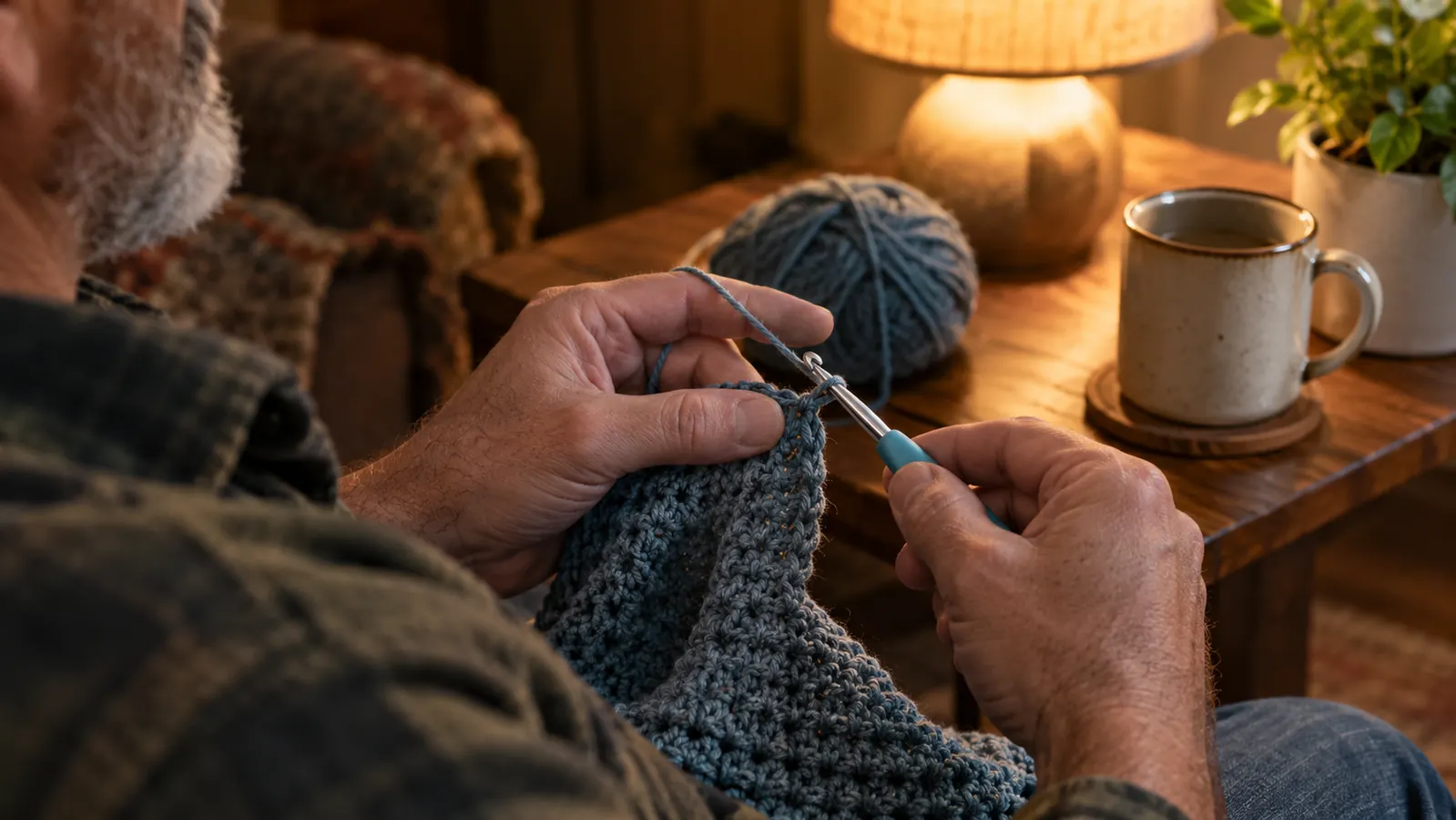
The whole point of an ergonomic hook is that your fingers do not have to squeeze as hard. Yarniss does this with a thick, cushioned handle that spreads the pressure across your palm and fingers instead of letting a skinny metal shaft dig into your thumb joint. The handle is soft enough to give, but firm enough that your stitches stay consistent. I have tried handles that were too squishy, where the hook wobbled in my grip, and handles that were so firm they might as well have been metal. This one sits in the middle, which is the right place.
For me, the key detail is where the grip sits relative to the hook head. Because the handle is thicker, my hand rests in a more relaxed position, and my thumb does not have to bend at the same sharp angle it did with a flat metal hook. That angle was the thing aggravating my arthritis. Changing it made a bigger difference than any of my earlier experiments. Before I ordered this set, I tried three things. The first was pencil grips from the school supply aisle, the kind you slide onto a pen. They helped my fingers but slid around on the hook shaft and never stayed put, so I was forever re-adjusting mid-row. The second was soft self-adhesive tape wrapped around the handle, which felt fine for an hour and then bunched up into a lump right where my thumb rests. The third was simply holding the metal hook looser, which did not work at all because a loose grip means loose stitches. All three failed for the same reason: they softened the pinch without fixing the angle that caused it.
I should also mention the weight. Some ergonomic hooks feel heavy in the hand, which creates a different kind of fatigue over a long project. Out of curiosity I weighed the 5.0mm hook on my kitchen scale: about 18 grams, barely more than the aluminum hook it replaced. The Yarniss hooks are light enough that I forget I am holding a cushioned hook, and that is exactly what I want.
The 20 Sizes: Useful Range or Filler?
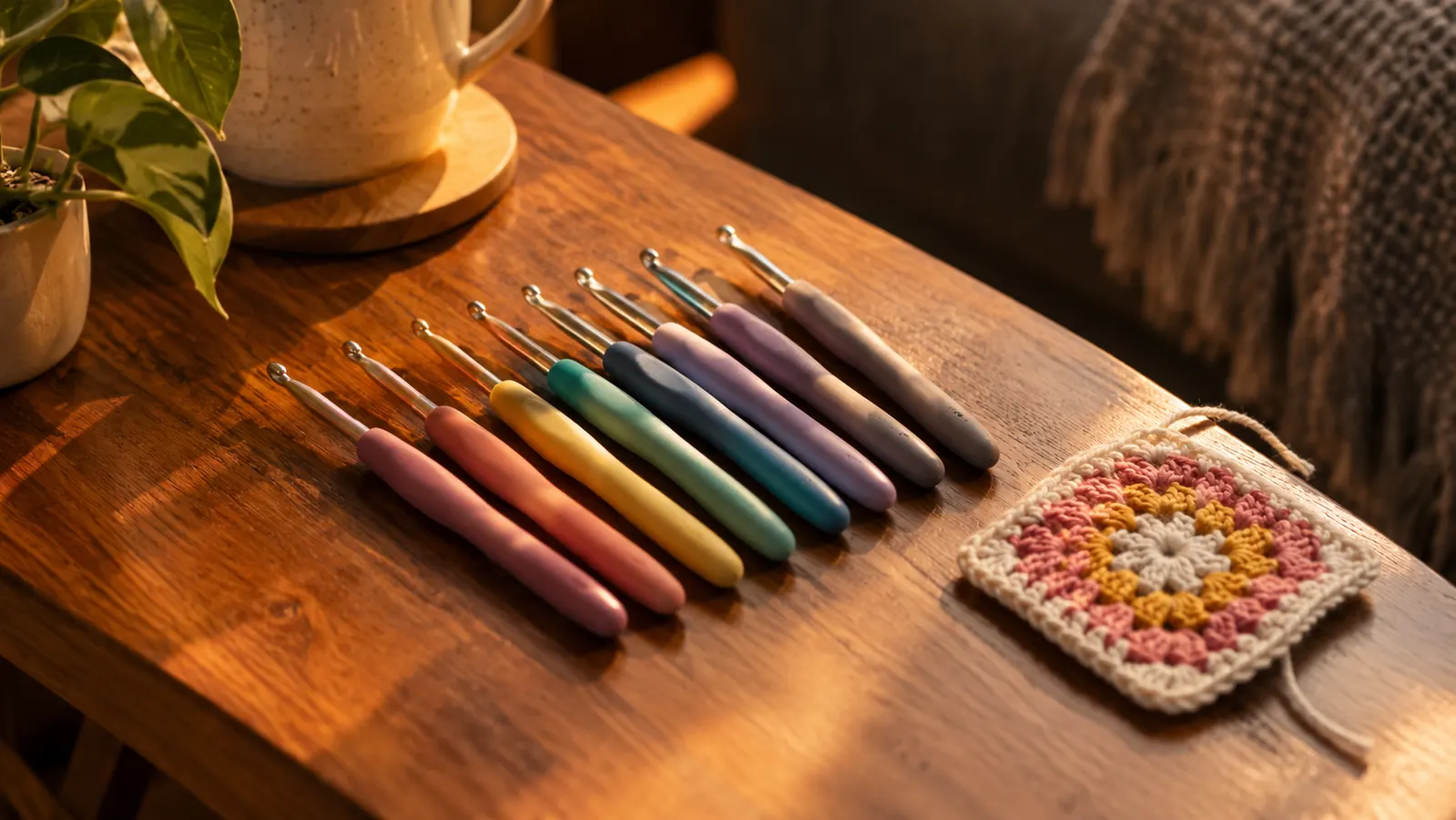
The set runs from 0.5mm to 10mm, which covers thread crochet at one end and jumbo yarn at the other. In six months, I have used maybe nine of the twenty sizes. The ones that get the most use are the 4.0mm for dishcloth cotton, the 5.0mm and 5.5mm for worsted weight afghans, and the 6.0mm for bulky yarn throws. The 3.5mm comes out for amigurumi, and the 2.5mm for the occasional doily I make as a gift. The tiny ones below 2.5mm mostly sit in the case unless I am doing fine thread work, and the giant ones above 8mm only come out for chunky blankets.
Here is why I still think the full set is worth it: the sizes I do use are the ones I need constantly, and buying them individually from other brands would cost more than this whole set. The unused sizes are not wasted. They are there the day you decide to try a different yarn weight, and the case keeps them organized instead of scattered through your project bag. One evening in November proved the point. I was halfway through a blanket worked in bulky yarn with the 6.0mm hook when I ran out of yarn. The only replacement I could find in the same color was worsted weight, which wants a 5.0mm hook, and there it was, two slots over in the case. I finished the last rows at a slightly tighter gauge and nobody but me will ever know. With my old hooks, that project would have stalled for a week while I waited for an order to arrive.
One practical note: the size is printed on the handle, and after months of use I can still read it. That sounds like a small thing, but I have owned hooks where the marking wore off within a year. On this set, the numbers are still clear on every hook I reach for regularly.
How It Holds Up Over Months of Daily Use
Durability was my biggest worry when I ordered them. Soft grips can peel, handles can slide, and cheap hooks can bend at the neck. After six months, I have not seen any of that. The grip material has not cracked, peeled, or gotten sticky, even though I have dropped hooks onto hardwood floors more times than I want to admit. One hook bounced off the arm of my chair and landed hook-first on the floor, and I braced for a bent tip. It was fine. The same hook has since survived a fall from my side table onto the brick hearth, the kind of drop that would have bent a cheap aluminum hook on impact. The hooks themselves have stayed straight, and the tips have not developed rough spots that catch on yarn.
The thing that did wear was the case. The zipper on the storage case is functional but not fancy, and after six months of being opened and closed several times a week, it still works but feels a little stiff. I have started leaving the case unzipped on my side table and just lifting the flap, which is easier on the zipper and easier on my thumb too. If the case ever gives out, I would just move the hooks to a pencil case, because the hooks themselves show no signs of quitting.
I have also washed two hooks by accident, leaving them in a project bag that went through the laundry. The first was the 4.0mm hook, which I found at the bottom of the washer drum while transferring clothes to the dryer. The second was the 5.5mm hook, which turned up in the dryer lint trap a week later. Both grips survived the wash without peeling, and both hooks still work fine. I would not recommend doing that on purpose, but it is reassuring to know the handle is not delicate.
The sharp, achy edge in my thumb was gone within the first week. Six months later, these are still the hooks I reach for every evening.
Where the Yarniss Set Falls Short
No review is honest without the cons, so here are mine. First, the smallest hooks in the set are very thin. If you have significant arthritis in your fingers, thread crochet with a 0.5mm hook is still going to be hard on your hands, no matter how cushioned the handle is. The grip helps, but it cannot fix the fact that tiny hooks require a delicate touch.
Second, the grip shape is rounded and smooth. Some crocheters prefer a handle with a flat side or a contoured thumb rest that locks the hook into one position. The Yarniss hooks let your hand find its own position, which I like, but if you want a hook that only fits one way, these are not it.
Third, the hooks do not glide through yarn the way a polished metal hook does. The yarn catches a little more on the shaft, especially with tightly spun worsted weight. It is not a dealbreaker, and I adjusted within a week, but if you love the slick feeling of a metal hook, expect a transition period.
What I Liked
- Soft, cushioned grip that noticeably eases pressure on my arthritic thumb joint
- 20 sizes from 0.5mm to 10mm cover every yarn weight I own
- Lightweight handles that do not cause a different kind of hand fatigue
- Grips have not peeled, cracked, or gotten sticky after six months of daily use
- Clear size markings that are still readable after months of handling
- Costs less than buying ergonomic hooks individually
Where It Falls Short
- Tiny hooks in the set are still hard on hands with significant arthritis
- Rounded grip has no contoured thumb rest for people who want a locked-in hold
- Yarn does not glide as smoothly as it does on polished metal hooks
- Storage case zipper feels stiff and is the first thing likely to wear out
Who This Is For
Buy the Yarniss ergonomic hook set if you crochet regularly and your hand gets tired, achy, or stiff during longer sessions. It is especially good for people whose pain comes from squeezing a thin metal hook, because the cushioned handle changes the angle of your grip and spreads the pressure. It is also a smart choice if you are tired of buying hooks one at a time and want every size in one organized case.
If you are newer to crochet, this set is a forgiving place to start. The grip makes it easier to hold the hook correctly, and the range of sizes means you will not outgrow the set as you move from dishcloths to afghans to amigurumi. I wish I had owned these years ago, back when I was gripping a metal hook so hard my hand cramped by the end of a row.
Who Should Skip It
Skip the Yarniss hooks if you do most of your crochet with thread or lace-weight yarn. The tiny hooks in this set are still thin, and the ergonomic handle does not fully solve that problem. You may be better off with a single ergonomic hook in the one or two small sizes you actually use.
Skip them if you love the slick, fast glide of a polished metal hook and do not want to adjust to a softer, slightly grippier shaft. And if your hand pain is severe, persistent, or getting worse, please do not rely on a hook to fix it. See a doctor or a hand therapist. The right hook can make crochet more comfortable, but it is not a substitute for proper medical care.
The Set That Ended My Search for a Comfortable Hook
After months of evening crochet, the Yarniss 20-size set is the one I keep reaching for. If your hands are tired of thin metal handles, this is a low-risk way to see if an ergonomic grip changes your sessions as much as it changed mine.
Amazon Check Today's Price on Amazon →