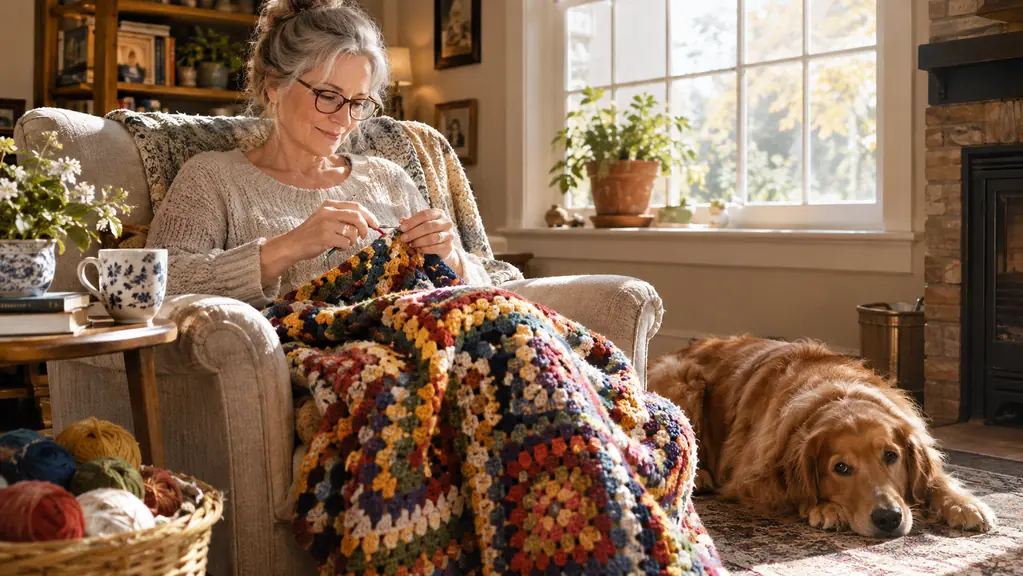
It was a Tuesday night in late September, and I was four rows away from finishing an afghan I had started the previous winter. My right thumb had been aching for an hour. I kept telling myself to push through, because that is what I have always done when a project is this close to done. Then I set the hook down, looked at my hand, and admitted what I had been avoiding. The hook was the problem, not me. The next day I drove to the yarn shop and walked out with my first Clover Amour hook. I did not know it at the time, but that one purchase would change how I spend my evenings.
That was two years ago. I am 58 years old, a former school office manager, and I have crocheted for about thirty years. I have mild arthritis in my right thumb joint. I have made afghans and throw blankets, amigurumi animals, and more dishcloths than I can count. I have also, over those three decades, collected hooks the way other people collect cookbooks. Metal hooks, plastic hooks, hooks with rubber grips that slid off after a month. None of them ever made my hand stop hurting. They just made the hurting happen a little slower.
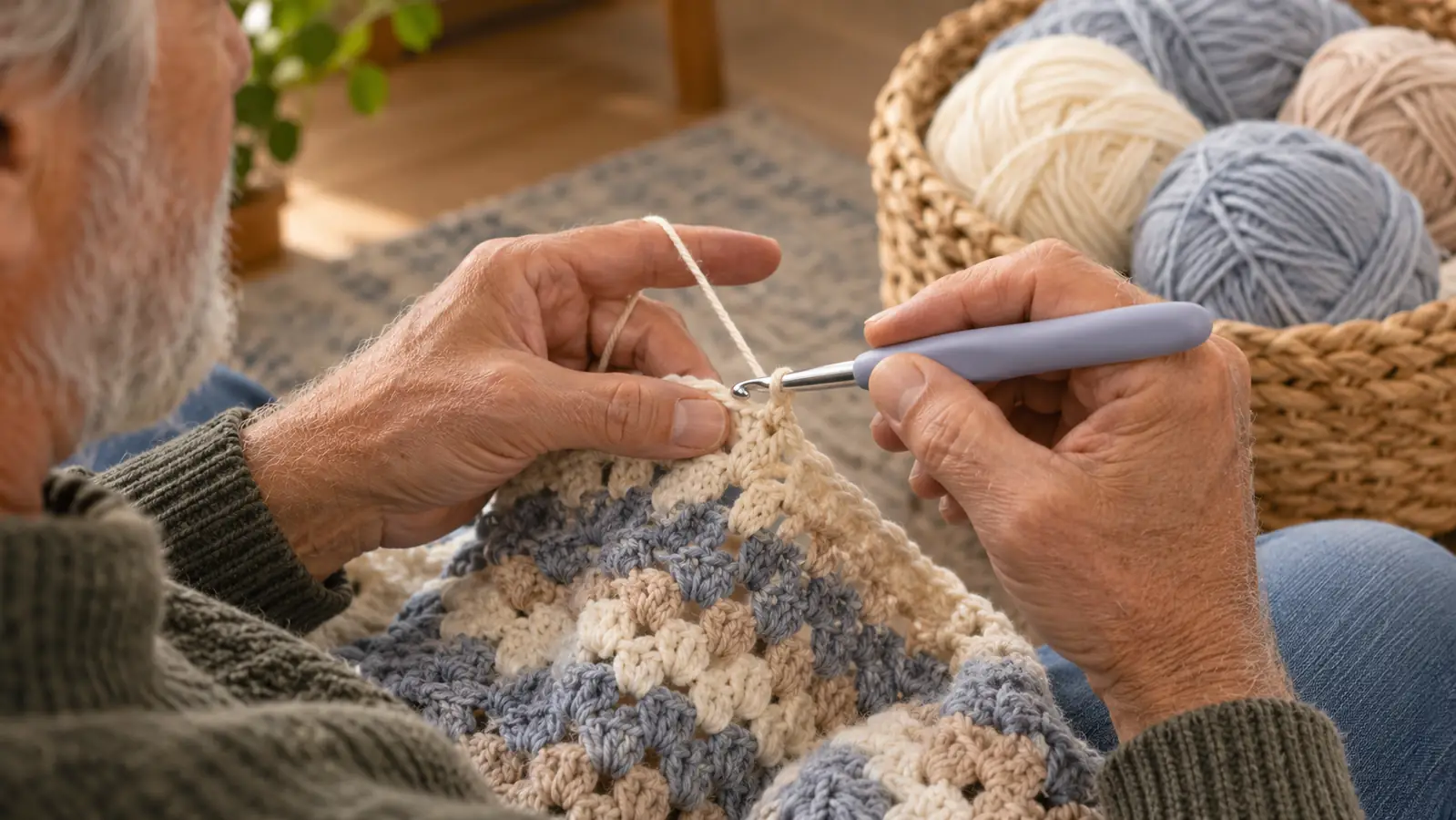
The Clover Amour hook felt different the first time I picked it up. The handle is soft and rounded, and it sits in my hand instead of digging into it. The hook itself is smooth, so the yarn glides over it without catching. I finished that afghan in two more evenings, and my thumb did not ache the way it usually did. I was suspicious at first. I am always suspicious when something works the way it is supposed to.
A few weeks later I bought the full set of ten sizes. I told myself it was for the variety of projects I make, which was true. But the real reason was simpler. I wanted to know if that first hook was a fluke. It was not.
Now the set lives in a zippered case on the side table next to my armchair by the living room window. Stormy, my seven-year-old Afghan hound, curls up on the floor beside me, and my two cats, Romeo and Juliette, four-year-old littermates, keep an eye on the yarn basket. I have learned to keep loose yarn where Juliette cannot reach it, because she will drag a skein across the house if I look away. That is a lesson I only had to learn once. The hooks themselves stay in the case when they are not in my hand, which keeps them safe from curious paws and keeps me from losing the small sizes in the cushion of the chair.
I know how that sounds. It sounds like a sales pitch. So let me tell you the rest of the story before you decide.
I finished that afghan in two more evenings, and my thumb did not ache the way it usually did.
The hook that changed how my evenings end
If your hands ache after a long crochet session, the Clover Amour set is worth a closer look. I have used mine for two years, and it is the first set that never made me want to stop early.
Amazon Check Today's Price on Amazon →I should be clear about what the hooks did and did not do. They did not cure my arthritis, and I would never claim that. They did change how long I can crochet before my hand complains. On a good evening I can work for two hours now, where I used to stop after forty-five minutes. That is the difference between finishing a blanket and leaving it in a bag under the side table. It is also the difference between looking forward to my evening and dreading it.
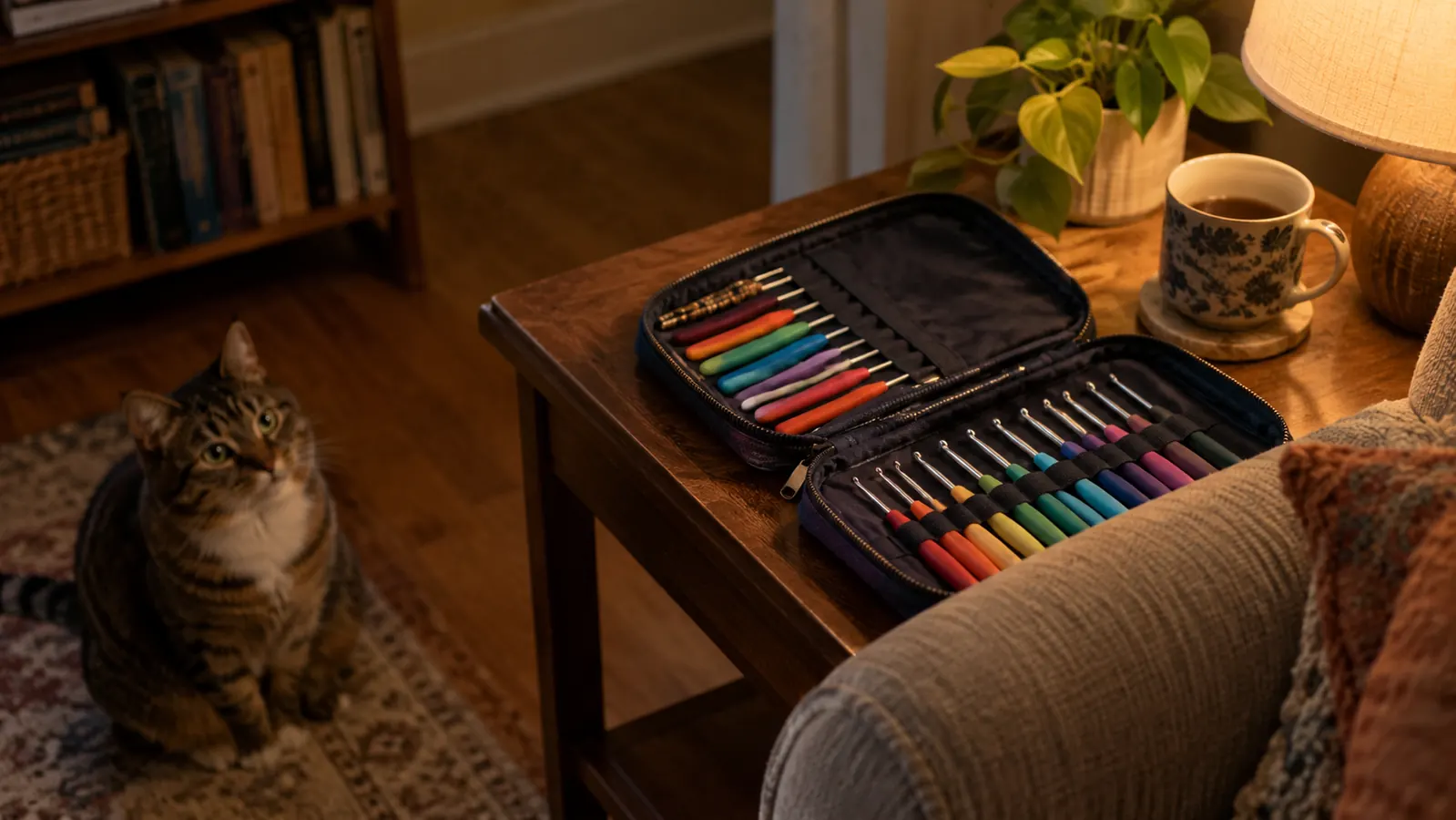
The set covers every size I reach for, from a small hook for amigurumi to the larger ones for worsted weight yarn. I keep the case closed when I am not using it, because Romeo has decided the zipper pull is a toy. He has only managed to open it once, and the hooks rolled across the floor like pick-up sticks. Stormy looked at them, looked at me, and stepped carefully around them. He is a gentleman.
I have also learned which hooks I reach for most. For afghans, I use the middle sizes almost every time. For dishcloths, I go a size down. For the amigurumi animals I make as gifts, I use the smallest hook in the set and a lot of patience. The handles are the same across all ten sizes, which matters more than I expected. My hand does not have to adjust to a different grip every time I switch projects.
The honest part: the hooks are not cheap, and I do not think you need all ten right away. If I were starting over, I would buy the one size I use most and see how my hand feels after a week. That is what I tell everyone at the yarn circle when they ask. Most of them come back for the set anyway, but the point is that the hook does the work, not the price tag.
I will also say this: the hooks have held up. Two years of evening use, and the handles still feel the same as they did the first week. The finish on the hooks has not worn, and none of the sizes have bent, even the small ones I use for amigurumi. I have dropped them, knocked them off the side table, and once left one in the car on a hot Louisiana afternoon. It came back inside and worked fine. I cannot say that about every hook I have owned.
What I'd Tell You If We Were Sitting at My Kitchen Table
If you were sitting at my kitchen table with a cup of coffee, here is what I would say. If your hands hurt when you crochet, do not ignore it. Try a hook with a softer, thicker handle before you give up on a project you love. It might not fix everything, but it might give you back the evenings you thought you had lost. And if the pain does not go away, please see a doctor or a hand therapist. I am not one, and I would never pretend to be. I can only tell you what worked for me: I switched to Clover, my hands stopped complaining as much, and I started finishing things again. That is the whole story, and it is a good one. If you try one hook, come find me at the yarn circle and tell me how it went.
The set I reach for every single evening
The Clover Amour set has more than eight thousand reviews on Amazon for a reason. If your hands are telling you to slow down, this is the hook set worth checking out. See the current price today.
Amazon Check Today's Price on Amazon →