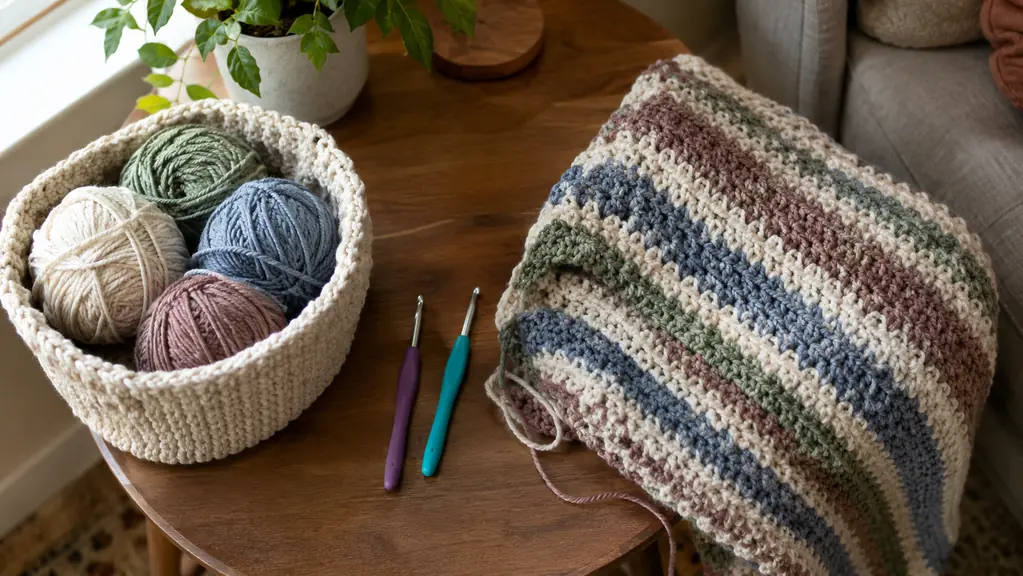
About ten months ago I stood in the yarn aisle at my local shop with a Clover Amour in one hand and a Tulip Etimo in the other, turning them over the way you do when you are trying to justify a purchase you have been thinking about for weeks. I had just finished one afghan and started another, and my right thumb, which has mild arthritis, was complaining every evening. I had read every comparison I could find online, and most of them said the same thing: both are excellent, you cannot go wrong, pick whichever feels better. That advice drove me crazy, because both of them felt fine in the store for thirty seconds. What I wanted to know was how they felt at nine o'clock at night, three hours into a row of double crochet. So I bought the Clover Amour set first, worked with it for six months, and then bought the Tulip Etimo set to test them side by side. I have kept both in my hook roll ever since, and the honest answer is that they are both excellent hooks that feel completely different in the hand. I am not a fast crocheter and I do not claim to be. I am the person who finishes things slowly, one row at a time, usually in the evenings with my dog Stormy asleep on the rug and one of the cats, usually Romeo, supervising from the arm of the chair. My projects are mostly afghans and throw blankets, plus amigurumi and dishcloths for gifts, and I have been doing this long enough to know that the hook matters more than almost anything else in my bag.
Here is the short answer. If you want one set that will carry you through long evenings of crochet without your hand complaining, buy the Clover Amour set. The soft, cushioned handle is the most comfortable hook grip I have used in thirty years of crocheting, and it is the set I reach for when my thumb is already tired. If you have smaller hands, prefer a slim lightweight handle, and want the sharpest hook tip on the market, the Tulip Etimo set is the better fit. The pointed tip slips into tight stitches cleanly and gives you a level of control that matters for amigurumi, lace, and colorwork. I used the Clover Amour set alone for six months before adding the Etimo set, so I have a clear before-and-after picture of what each one does. I will tell you exactly where each one wins, where each one loses, and I will be honest about the fact that one of them hurt my hand on a long project.
| Clover Amour | Tulip Etimo | |
|---|---|---|
| Handle feel | Soft, cushioned, rounded handle that fills the palm | Slim, smooth, tapered handle that suits smaller hands |
| Hook tip | Smooth, rounded tip that glides through yarn | Sharper, more pointed tip for precise stitch placement |
| Long-session comfort | The cushioning absorbs pressure on the thumb joint | The slim handle asks more of the grip over hours |
| Stitch definition | Good, though the rounder tip can split fine yarn | Excellent, the pointed tip slips into tight stitches cleanly |
| Grip texture | Soft rubber-like coating that stays put even with lotion on | Smooth surface that can feel slippery for some hands |
| Weight in hand | A little heavier, which feels grounding for some | Lighter, easy to maneuver for hours |
| Set range | Ten sizes from 2.25 mm to 6.0 mm | Ten sizes covering fine to bulky yarns |
| Best for | Long afghan sessions, arthritis-friendly comfort | Amigurumi, fine yarn, and precise colorwork |
Where Clover Amour Wins
The Clover Amour handle is the reason I bought the set, and it is still the reason I reach for it most evenings. The handle is soft, slightly cushioned, and rounded enough to fill my palm without feeling bulky. I have mild arthritis in my right thumb joint, and with a plain metal hook I can feel it after about forty-five minutes. The ache starts low in the thumb and spreads into the webbing of my hand by the time I am an hour in. With the Clover Amour, I worked a full evening on a striped throw for my niece, about three hours of continuous crochet with a 5.0 mm hook, and my hand was tired the way a hand should be tired after a good night of work, not sore. That is not a small difference. That is the difference between finishing a project and leaving it in the basket for another month.
The grip is also genuinely non-slip. I crochet in the evenings with a cup of tea on the side table, and my hands are not always perfectly dry. The Clover handle has a soft rubber-like coating that stays put even when my hands are a little damp from the mug. I have never had the hook slide in my grip mid-stitch, which is more than I can say for every metal hook I have owned. The set comes in ten sizes from 2.25 mm to 6.0 mm, and I have used every single size in the ten months since I bought it. The 2.25 mm hook worked for a tiny amigurumi turtle I made for a coworker's baby shower. The 6.0 mm hook carried a chunky blanket in a weekend. The sizes in between have done dishcloths, scarves, and the striped afghan I am still working on. One thing to know: the cushioned handle makes the hook slightly wider in the hand, and if you have very small hands or a tight grip, that extra width can take an evening to get used to.
The one place the Clover gives me trouble is fine, single-ply yarn. The rounder tip is smooth, but on a slippery single-ply cotton it can catch and split a strand every few rows. I noticed it most on a lightweight summer top I attempted in a fingering-weight yarn. I frogged the whole thing twice before I realized the hook was part of the problem, switched to the Etimo, and the same yarn behaved. So the Clover is my everyday hook, but it is not my fine-yarn hook. It is the one real weakness I have found in ten months, and I mention it because the fine-yarn crowd is exactly the group that should look hard at the Etimo before they buy.
I also want to say something about the case. The Clover Amour set comes in a sturdy vinyl roll with a slot for every hook, and ten months in it still closes flat and keeps the hooks from rattling. I have owned hook sets that came in flimsy pouches, and the difference matters when you are digging through a project bag in low light. The size markings on the handles are printed clearly, which sounds like a small thing until you are holding three hooks that all look similar and you cannot tell the 4.5 from the 5.0. The Clover markings have never worn off, even on the hooks I use every day.
Where Tulip Etimo Wins
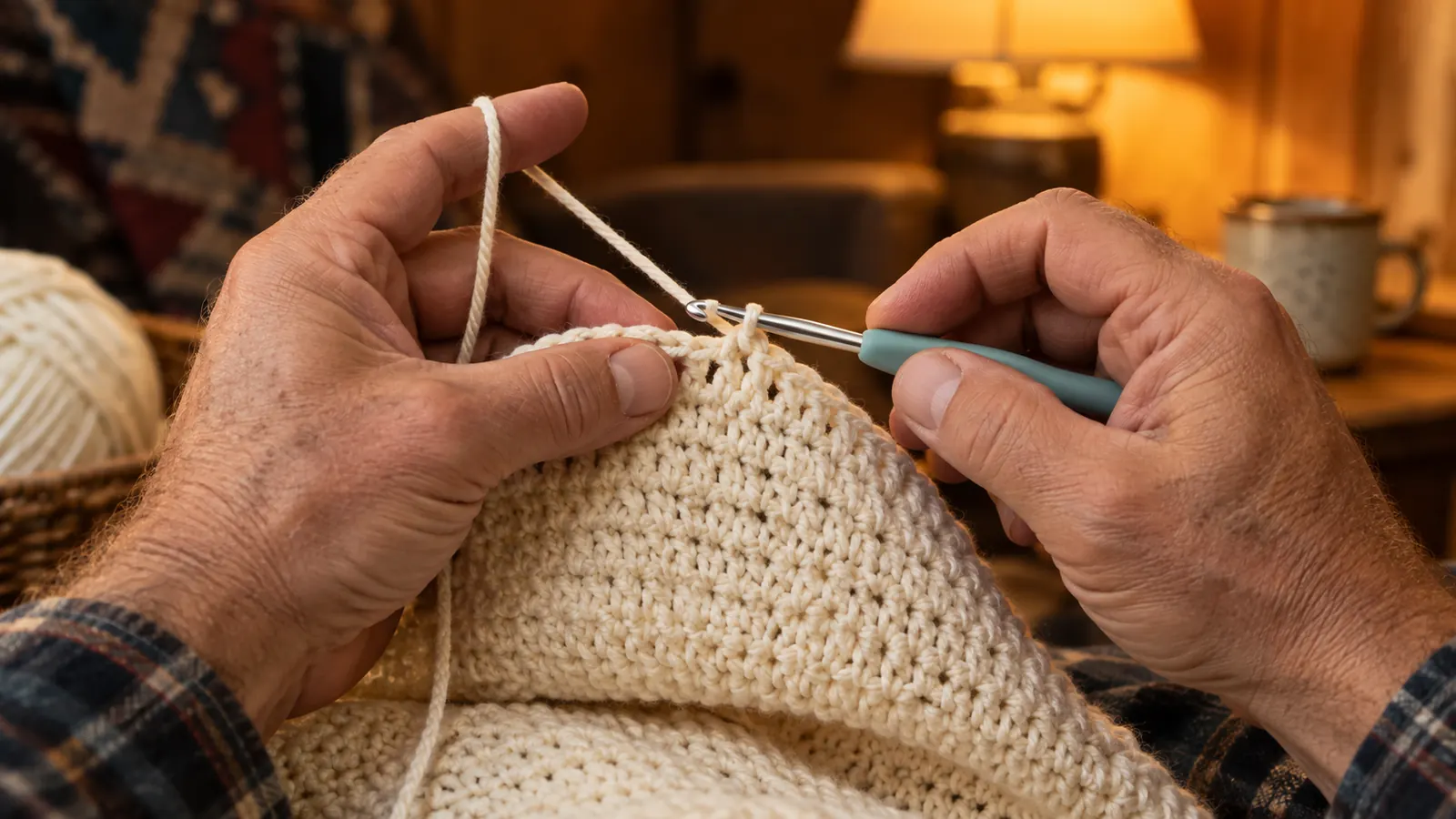
I will be honest: I did not expect to like the Tulip Etimo as much as I do. I bought it six months after the Clover set, mostly because a friend at the yarn circle would not stop talking about the tip, and I assumed the slim handle would be uncomfortable for my hands. Instead, I found that the slim handle gives me a level of stitch control I did not know I was missing. The hook tip is noticeably sharper and more pointed, and it slips into tight stitches cleanly without splitting the yarn. The first thing I made with it was a cream dishcloth in a 4.0 mm size, and the difference showed up in the very first rows. My tension was more even, my edges were straighter, and I did not have to stop and redo a stitch because the hook had caught a strand of the yarn. When I am working on amigurumi with fine yarn and small hooks, the Etimo is the hook that lets me place each stitch exactly where I want it.
The Etimo also wins on stitch definition, and I think the reason is the throat of the hook as much as the tip. The pointed tip and the smooth, shallow throat mean the yarn slides through with less friction, so the stitches sit more uniformly. I noticed this most on a cream-colored dishcloth I made with a 4.0 mm Etimo, working the same pattern I had made twice before with the Clover Amour. The rows were straighter and the tension was more consistent, and when I held the two dishcloths side by side, the Etimo version looked neater. Where the Etimo loses for me is long sessions. The slim handle asks more of the grip over time, and after about two hours of continuous crochet with the Etimo, I can feel the fatigue in my thumb in a way I do not with the Clover. I have not had it turn into actual pain, but I have learned to switch hooks when I feel it coming. I also found that the smooth handle can feel slippery if my hands are at all damp, so I keep a small towel nearby when I use it.
The Etimo set also travels well. The hooks come in a slim vinyl case that rolls up tight, and the smooth handles do not catch on the fabric of my project bag. I took the Etimo set to a weekend retreat in March, working on a lace shawl in a 3.5 mm size, and it was the only set I packed. The shawl came out more even than any lace I have made with the Clover, and I have made a lot of lace over the years. If I were starting over and only doing fine work, the Etimo would be my first purchase. But I am not only doing fine work, and that is why both sets live in my hook roll.
One more honest note about the Etimo. The hooks are elegant, with a slim profile, and they look neat lined up in their case. But the smooth handle means I have to be more careful about how I hold it. I grip a little tighter than I do with the Clover, and that extra grip pressure is exactly what my thumb notices after a long evening. If you already have hand pain, I would not make the Etimo your only set. If your hands are healthy and you want precision, it is a joy to use. I would also say the Etimo rewards a light touch. If you tend to death-grip your hooks, the slim handle will amplify that habit, and your hand will let you know.
The Clover Amour is the hook I reach for when my thumb is tired. The Tulip Etimo is the hook I reach for when the stitches need to be perfect.
The hook that got my afghans finished
If your hands get tired before your project does, the Clover Amour set is the one to try. Ten sizes, soft grips, and the only hooks I have used for ten months without a single hand complaint.
Amazon Check Today's Price on Amazon →
Who Should Buy Which
Buy the Clover Amour set if you crochet for long stretches, if you have any hand or thumb discomfort, or if you mostly make afghans, blankets, and other projects where comfort matters more than perfect stitch definition. Buy the Tulip Etimo set if you have smaller hands, if you prefer a slim lightweight handle, or if you spend most of your time on amigurumi, lace, or fine yarn where a sharp tip makes a real difference. And if you can only justify one set, I would tell you the same thing I tell my friends at the yarn circle: start with the Clover Amour, because the comfort is what keeps you coming back to finish the project. If you already own the Clover Amour set and are wondering whether the Etimo is worth adding, I would say yes only if you do the kind of work that rewards a sharper tip. I use both sets every week, and the Etimo does not replace the Clover, it covers the jobs the Clover is not ideal for. For my own hands, the Clover is the everyday hook and the Etimo is the specialist. That is not a verdict against either one. It is the honest answer after ten months of using both. And if your budget only stretches to one set, buy the Clover, use it for a month, and then decide whether the Etimo is worth adding. That is exactly what I did, and it is the only way to know which one your hands actually prefer.
Still deciding? Start with the set that protects your hands
The Clover Amour set has carried me through ten months of evening crochet without a sore thumb. It is the set I would buy again tomorrow, and the set I recommend to anyone who wants to actually finish what they start.
Amazon Check Today's Price on Amazon →