I started this blanket in early November, and I finished it just after New Year's. That timing matters, because the whole point of this test was to find out whether Lion Brand Yarn Wool-Ease Thick and Quick is as good to live with as it is to buy. I have crocheted for about thirty years, mostly afghans and throws, and I have gone through enough yarn to know that a skein's real character shows up in the sixth month, not the first hour.
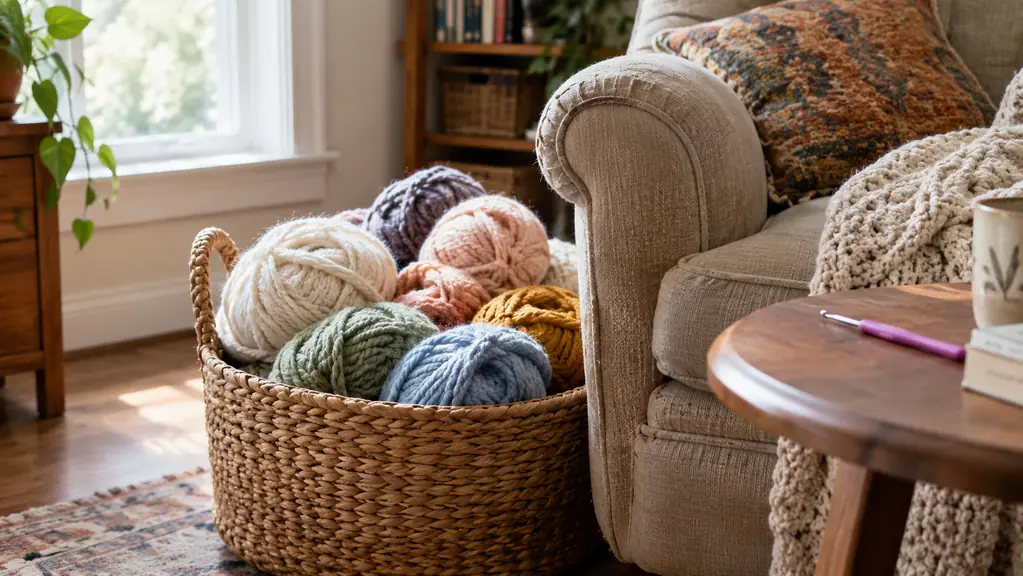
The blanket in question is a big throw, roughly sixty by fifty inches, worked in half double crochet with a size L hook. I chose it because I wanted something I would actually use every evening in my armchair by the window, with Stormy the Afghan hound curled at my feet and the cats, Romeo and Juliette, doing their level best to steal the loose end. A yarn that cannot survive that household is not a yarn I need.
The Quick Verdict
A soft, fast-working wool blend that wears well after months of daily use. It fuzzes a little and it is not the cheapest bulky yarn on the shelf, but for blankets you will actually finish, it earns its place.
Amazon Check Today's Price →The yarn that finally got my WIP pile under control
If you want a bulky wool blend that works up fast and holds up to real life, this is the one I keep buying. Check today's price on Amazon and see if it fits your next project.
Amazon Check Today's Price on Amazon →How I've Used It
I have now made three projects with this yarn: the throw I mentioned, a smaller lap blanket that I gave away as a gift, and one amigurumi owl that I will not be repeating in this weight. The throw is the one I can speak about honestly, because it has been washed, sat on, pulled by a cat, and generally treated the way a real blanket gets treated.
The yarn is a blend of acrylic and wool, which is the whole reason it behaves the way it does. The wool gives it warmth and a little spring. The acrylic keeps the cost down and makes it machine washable. That combination sounds simple, but in practice it makes this yarn forgiving to work with in a way that pure wool often is not.
I worked the throw in half double crochet, which is my default for bulky yarn. It took me about six evenings of steady work, maybe twelve hours total. For comparison, a similar throw in a worsted weight yarn takes me three or four times that long. The speed is not the only reason to choose a bulky yarn, but it is a real one.
What This Yarn Is Actually Like to Crochet
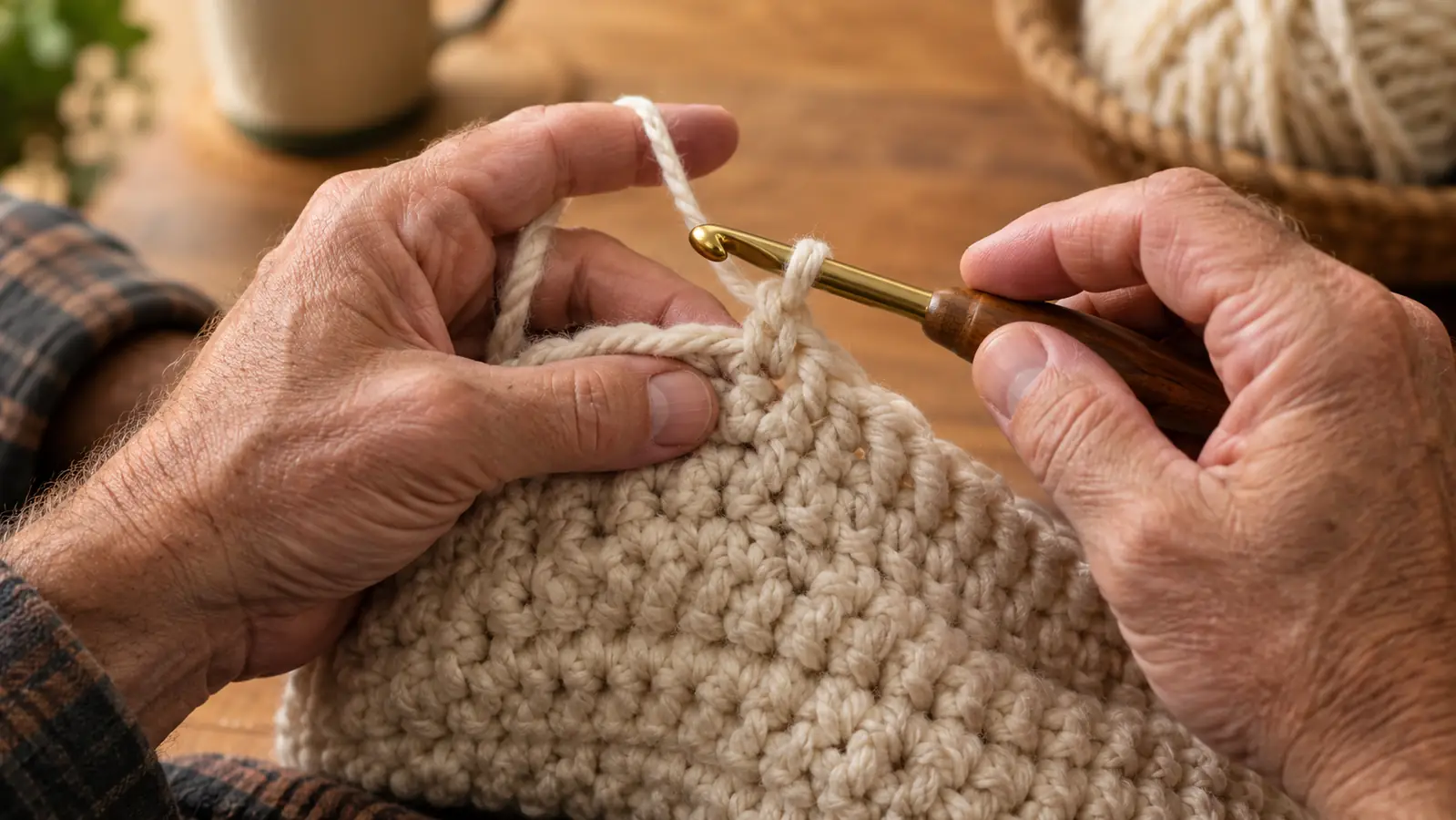
The first thing you notice is the texture. Wool-Ease Thick and Quick has a soft, slightly fuzzy surface that feels nothing like the scratchy wool I learned on in the nineties. It glides over a metal hook without that grabby feeling you get from some acrylics, and it does not split, which is the one thing I cannot forgive in a yarn.
The other thing I noticed is how little it twists. Some single-ply bulky yarns untwist as you work, and you spend half your evening fighting the strand. This one stays put. That matters more to me now that I have mild arthritis in my right thumb, because the less I have to correct the yarn, the longer I can crochet before my hand complains.
One honest note: it does fuzz as you work it. You will see little pills of fiber forming on your lap and on the blanket as you go. I did not find this annoying, and most of it comes off in the first wash. But if you are the kind of person who wants a perfectly smooth surface, this is not that yarn.
I want to be careful here, because I am not a doctor and I do not give medical advice. What I can tell you is my own experience: this yarn is light enough on the hook that I can work longer before my right thumb starts to complain. The smooth surface means I do not have to grip as hard, and the bulky gauge means fewer stitches overall. If hand pain does not go away, please see a doctor or a hand therapist. But for me, this yarn is easier on my hands than most.
How It Held Up Over Six Months
The throw has been through the wash four times now, on a gentle cycle in cold water, and it comes out looking almost exactly as it did when I finished it. There is a little pilling, mostly on the parts that get the most friction, like the corners that tuck under Stormy's weight when she settles on the couch.
I have not seen any of the things that usually send me back to the yarn shop. No pilling that turns into holes. No edges that curl or stretch out of shape. No fading, even on the part that sits in the afternoon sun by the window. The wool content means it keeps a little bit of bounce, so the blanket has not gone flat and limp the way a pure acrylic blanket will after a season of use.
The cats have also weighed in, whether I asked them to or not. Juliette in particular has claimed the corner of this blanket, and her claws have not done any damage I can see. That is a better test than anything I could design on purpose.
I should also say that I have not babied this blanket. It has been dragged to the couch, folded under a sleeping dog, and used as a lap cover while I drink my coffee. If a yarn is going to fail, that is how it will fail, and this one has not. The edges are still straight, the corners are still square, and the stitches have not stretched out of shape.
The Tradeoffs Nobody Mentions
Here is what I would tell a friend before she buys a dozen skeins. First, this yarn is heavier than you expect. A finished throw is genuinely warm, which is wonderful in January and a problem in July. If you live somewhere hot, this is a winter yarn, full stop.
Second, the color selection is enormous, which sounds like a good thing until you are standing in the aisle trying to pick. I have learned to buy all my skeins from the same dye lot, because even within the same color name, different dye lots can be slightly different. That is true of almost any yarn, but with a bulky yarn the difference is more visible.
Third, the fuzzing I mentioned. It is minor, but it is real, and it means this yarn is not my first choice for something like a delicate baby garment where you want a crisp stitch definition. For blankets, which is what I mostly make, it is a non-issue.
One more thing, and this is the one that catches people. Because the yarn is bulky, a single project uses a lot of it, and that means the cost adds up faster than you expect. A throw can take five or six skeins, so the total is higher than the per-skein cost suggests. I think it is still worth it, because the finished blanket gets used every single day, but I would rather you know before you start.
How Much Yarn You'll Need
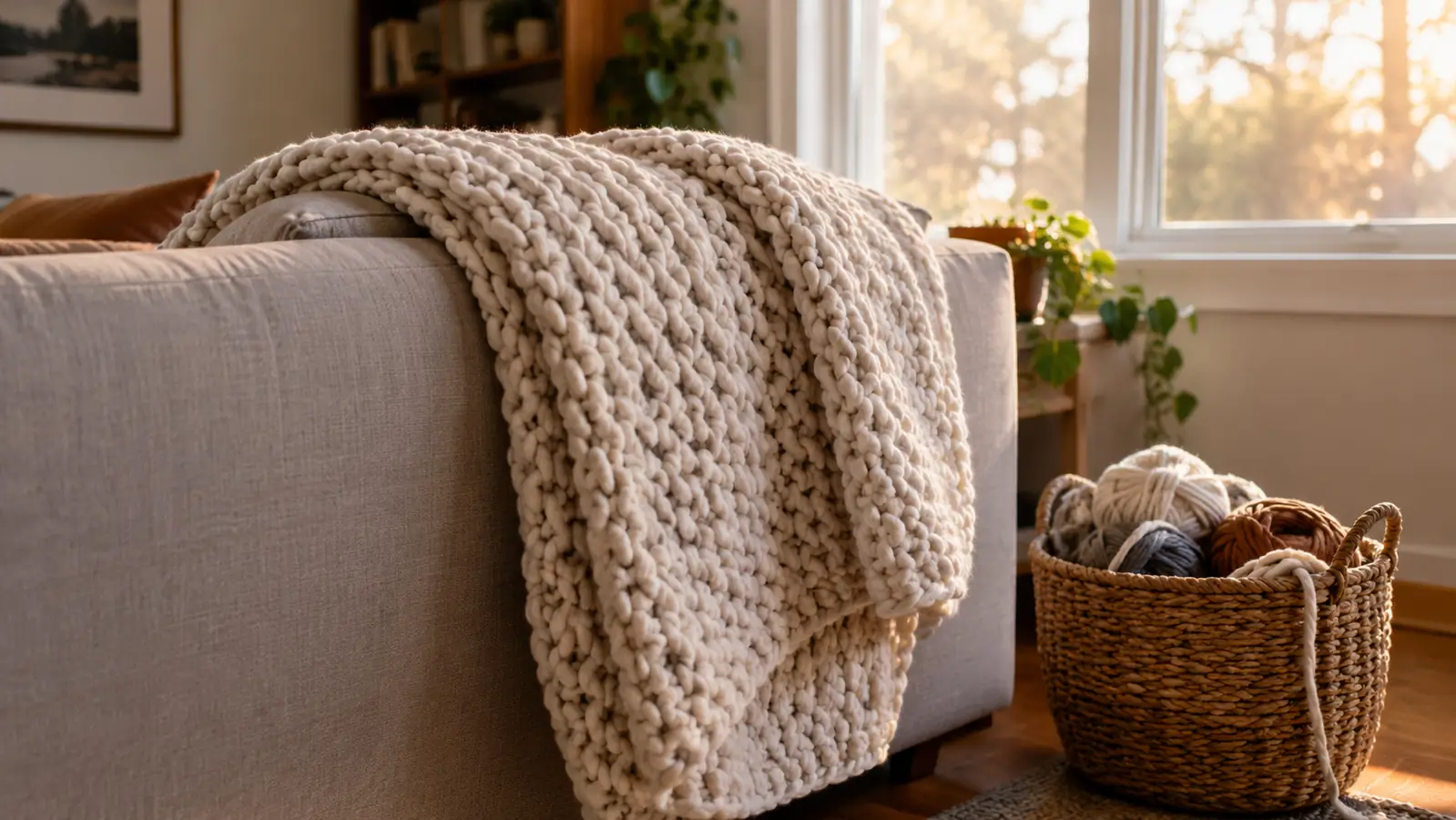
For a throw like mine, about sixty by fifty inches, I used six skeins of Lion Brand Yarn Wool-Ease Thick and Quick worked in half double crochet. That number will change with your stitch and your tension, so I always buy one extra skein and keep the receipt. Running out of yarn in the middle of a blanket is the fastest way to end up with a project that never gets finished.
The label gives a gauge, and I found it accurate, which is not something I can say for every yarn. If you crochet loosely like I do, you will use a little more yarn than the label suggests. If you crochet tight, you will use a little less. Either way, the extra skein rule has saved me more than once.
This is also the point where I will mention the three pack. Lion Brand Yarn sells this in a three pack of matching skeins, which is convenient if you are starting a project that will take more than one. I have bought several of these packs, and the skeins in each pack have always matched. Between packs, I check the dye lot numbers before I trust them.
One question I get asked a lot is whether this yarn works for amigurumi. I tried it once, and I would not recommend it. The stitches are too loose for small toys, and the fuzzy surface hides the shaping that makes amigurumi cute. Save this yarn for blankets and scarves, where the bulk works in your favor.
Alternatives I Considered
I compared this to a few other bulky yarns before I committed to a whole blanket. There is a cheaper acrylic bulky yarn that works up just as fast, and I have used it for dishcloths and quick gifts. But after a few washes it goes flat and starts to pill in a way this yarn does not. If you want the full breakdown of how Lion Brand Yarn's wool blend compares to plain acrylic, I wrote that out separately.
I also tried a more expensive pure wool bulky yarn, and it is lovely, no question. It holds its shape beautifully and it feels even softer. But it is harder to wash, it costs more per skein, and for a blanket that is going to be dragged around the living room by a dog and two cats, I could not justify it. This yarn sits in the middle, and for most of my projects, the middle is exactly where I want to be.
And if you are still deciding whether bulky yarn is worth it at all, I have a whole list of reasons why it is my go-to for crochet blankets. The short version: it works up fast, it is warm, and it hides small mistakes in a way that finer yarn never will.
One alternative I have not tried but see recommended constantly is a cotton blend bulky yarn. I have not made a blanket with it, so I will not pretend to have opinions about it. What I will say is that cotton does not have the same spring as wool, and it is heavier when wet, so it behaves differently in the wash. If you are choosing between the two, think about how you will wash the finished piece.
What I Liked
- Soft, comfortable texture that never feels scratchy
- Works up fast, a throw in about twelve hours
- Machine washable and holds up well after months of use
- Does not split or twist while you work
- Warm without feeling heavy in a bad way
Where It Falls Short
- Fuzzes as you work and pills a little with heavy use
- Heavier than expected, a winter-only yarn in warm climates
- Color can vary between dye lots, so buy all at once
- Not ideal for projects that need crisp stitch definition
Four washes in, the blanket looks almost exactly as it did the day I finished it. That is the test that matters.
Who This Is For
Buy this yarn if you want to finish a blanket this season instead of next year. It is for people who want a soft, warm, washable throw that does not require a second mortgage, and who are willing to accept a little fuzz in exchange for that. It is also for anyone whose hands get tired with finer yarn, because the bulky gauge means fewer stitches per blanket and a faster finish.
Who Should Skip It
Skip it if you need a crisp, defined stitch for something like a lace shawl or a detailed colorwork piece, because the fuzzy halo blurs those details. Skip it if you live in a warm climate and want a blanket you can use year round. And if you are allergic to wool, even the small amount in this blend can be a problem, so do a quick skin test before you buy a whole batch. If you are still deciding, buy one skein first, make a small swatch, wash it, and see how you feel. That tells you more in twenty minutes than any review can.
Ready to start a blanket you will actually finish?
Lion Brand Yarn Wool-Ease Thick and Quick is the yarn I keep coming back to for throws and afghans. See today's price on Amazon and grab enough skeins for your next project before the weather turns.
Amazon Check Today's Price on Amazon →