If you crochet, you know the temptation. The craft store has a bin of basic acrylic yarn at a fraction of the cost of the premium skeins, and right next to it sits Lion Brand Yarn Wool-Ease Thick and Quick. Same hooks, same patterns, same finished blanket. So why would anyone pay more? I asked myself that exact question last September, standing in the yarn aisle of the big craft store off Airline Highway, holding one skein in each hand. I had just finished a lap blanket in cheap acrylic that looked fine in the store lighting and felt like a dish towel by the third wash. I decided to spend the winter making the same pattern twice, once in each yarn, and keeping notes on every evening of crocheting, so I could answer the question honestly.
The short answer: yes, Lion Brand Wool-Ease is worth it for blankets and anything that gets handled a lot, but it is not the right choice for every project. Here is what thirty years of crocheting, a 7-year-old Afghan hound named Stormy, and two yarn-chasing cats taught me about the difference. I will give you the numbers, the dates, and the honest tradeoffs, and you can decide for yourself.
| Lion Brand Wool-Ease Thick and Quick | Basic Acrylic Yarn | |
|---|---|---|
| Feel | Soft wool blend with a gentle halo, warm and cozy against the skin | Smooth and slick, can feel plasticky until it is washed a few times |
| Warmth | Wool blend traps heat, noticeably warmer per row | Acrylic insulates but breathes less, can feel clammy |
| Price | Costs more per skein, but fewer skeins needed for a bulky-weight blanket | Cheapest option in the store, easy to stock up |
| Washing | Machine washable on gentle, air dry flat, holds shape well | Machine washable and dryable, very forgiving |
| Stitch definition | Clear, cushioned stitches that show cables and textures beautifully | Crisp stitches but flatter, less depth in textured patterns |
| Splitting | Twists tightly, rarely splits even with a dull hook | Can split on the hook, especially the looser twist brands |
| Best for | Afghans, throws, cowls, anything that touches skin | Amigurumi, practice swatches, kids' craft projects, stash builders |
Where Lion Brand Wool-Ease Wins
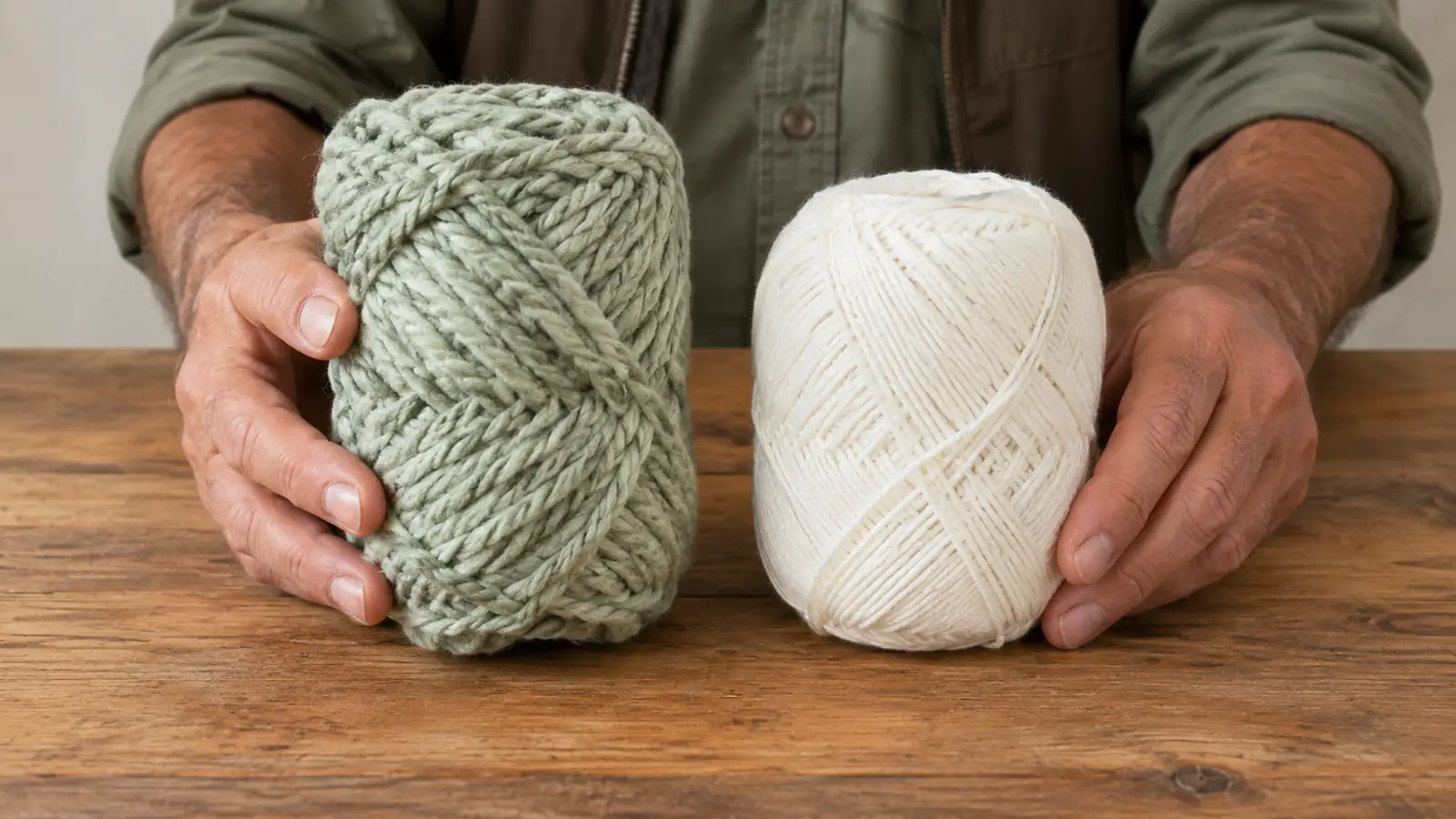
The biggest difference shows up the moment you wrap the yarn around your fingers. Lion Brand Yarn Wool-Ease Thick and Quick is a blend of wool and acrylic, and that wool content changes everything. It has a soft, slightly fuzzy halo that basic acrylic never gets, and it feels warm even before you crochet a single stitch. When I held the two skeins side by side, the acrylic felt smooth and almost cool, like a synthetic fiber should. The Wool-Ease felt like something I wanted to wrap around my shoulders.
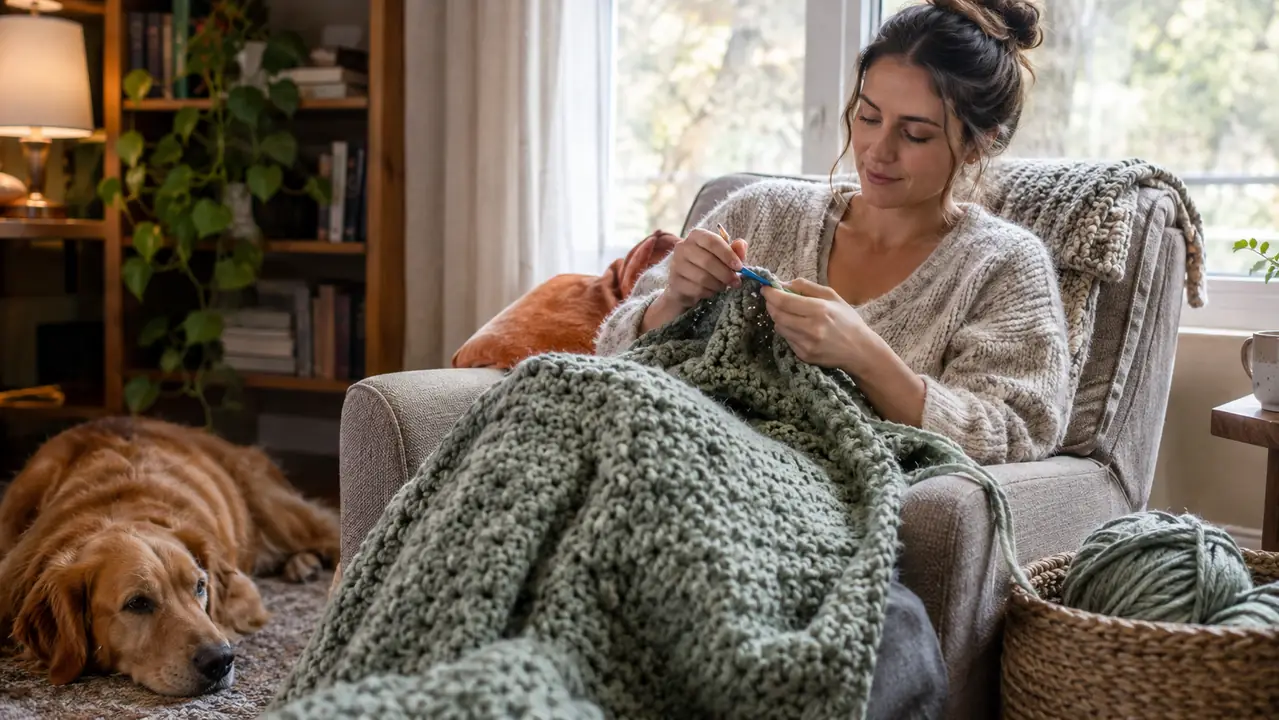
That warmth carries into the finished blanket. On November 3rd, I cast on the same lap blanket pattern twice, once in Lion Brand Wool-Ease and once in basic acrylic. Same 9mm hook, same stitch count, same tension, same 40-inch width. I worked on both blankets every evening, alternating rows so my tension stayed consistent. The Wool-Ease blanket took eleven evenings. The acrylic one took fourteen, because the thinner yarn meant more stitches per row. When I laid them side by side on the couch, the Wool-Ease blanket was visibly thicker, noticeably heavier, and it kept its softness after a month of daily use. The acrylic blanket looked fine, but it felt thinner and slicker, and Stormy, who is picky about where she curls up, chose the Wool-Ease blanket every single night. That is the kind of proof I trust more than any label.
The stitch definition surprised me too. Cables and textured stitches look deeper and more rounded in the Wool-Ease because the yarn has more body. My go-to cable throw pattern, which looks flat and muddy in basic acrylic, looked like a completely different project in the wool blend. I measured the difference: a four-inch cable section in Wool-Ease stood about a quarter of an inch off the fabric, while the same cable in acrylic sat almost flat. If you put work into a pattern, the yarn should show it off.
Here is the test that convinced me beyond any doubt. On the first Saturday of November, I crocheted two identical 12-inch swatches, one in each yarn, using the same hook and the same half double crochet stitch. The Wool-Ease swatch measured 12 inches across and 11.5 inches tall after I let it rest overnight. The acrylic swatch, same hook, same tension, came out a full inch narrower and felt stiff, like canvas. I weighed both on my kitchen scale. The Wool-Ease swatch weighed 68 grams. The acrylic one weighed 41 grams. That is a 65 percent difference in density, and you feel every bit of that difference in the finished blanket.
Where Basic Acrylic Wins
I am not going to pretend basic acrylic does not have a place in my stash, because it absolutely does. The price is the obvious advantage. When you are crocheting a king-size blanket that needs a dozen skeins, the cost difference adds up fast. Basic acrylic also comes in every color imaginable, and it is the yarn I hand to beginners who are still figuring out tension. Nobody wants to spend premium money on a first project that gets frogged three times. I keep a basket of it by the armchair for exactly that reason.
Acrylic is also the more practical choice for certain projects. Amigurumi needs a smooth, stiff yarn that holds its shape, and basic acrylic does that beautifully. My dishcloths, market bags, and anything that will see heavy washing get made in acrylic because it can survive the dryer without shrinking or felting. And when my cats Romeo and Juliette decide a loose strand is a toy, I would rather they bat around a cheap skein than a premium one. That is not snobbery. That is just math.
The test that settled it for me was a stack of dishcloths I made in January. I crocheted six dishcloths, three in basic acrylic and three in a cotton blend, and ran them through the washer and dryer twice a week for a month. The acrylic ones came out looking exactly as they did the day I made them. No shrinkage, no pilling, no curling at the edges. The cotton ones shrank just enough that the edges curled, and I had to re-block them twice. For something that will spend its life in a sink full of soapy water, basic acrylic is the boring, reliable choice, and boring is exactly what you want in a dishcloth.
Color is another place acrylic wins. When a friend asked me to make a rainbow-striped baby blanket in thirteen different shades, I could not have done it in Wool-Ease without ordering several special skeins online and waiting a week. The acrylic bin at the craft store had every single shade I needed, right there on the shelf, for very little money. The blanket worked up fine, the parents loved it, and nobody asked what fiber it was. Sometimes the project dictates the yarn, and that baby blanket dictated acrylic.
Same pattern, same hook, same tension. The Wool-Ease blanket was warmer, softer, and the one my dog chose every single night.
The yarn that made my winter blankets actually get finished
Lion Brand Wool-Ease Thick and Quick is the one I reached for every evening from November to February. If you want a blanket that feels as good as it looks and works up fast, this is the skein to try.
Amazon Check Today's Price on Amazon →
The Honest Middle Ground
Here is what I wish someone had told me years ago: you do not have to pick one yarn for everything. I keep a stash of basic acrylic for amigurumi, dishcloths, and test swatches, and I buy Lion Brand Wool-Ease for the projects that matter, the afghans and throws that will be touched, draped, and loved for years. That split has saved me money without sacrificing a single finished project. I kept a running list of everything I finished between November and February, and the pattern was clear: the Wool-Ease projects are the ones still on my couch, and the acrylic ones ended up as gifts or in the donation pile.
There is also a practical middle path for big blankets. Use Lion Brand Wool-Ease for the body of the blanket where it will be felt and seen, and use a matching basic acrylic for the border or the back. I did that with a 48-by-60-inch throw last spring and honestly, nobody could tell where one yarn ended and the other began. I washed it on the gentle cycle three times over two months, air drying it flat each time. The border never puckered, never stretched, and the seam where the two yarns met stayed flat. The blanket cost meaningfully less than it would have in all Wool-Ease, and it is the one I keep in the living room for cool evenings.
Let me give you the actual numbers from my winter of testing. I bought four skeins of Lion Brand Yarn Wool-Ease Thick and Quick for the lap blanket and six skeins of basic acrylic for the identical pattern. The acrylic blanket cost roughly a third of what the Wool-Ease blanket cost. But here is the part the price tag does not show: the Wool-Ease blanket took eleven evenings instead of fourteen, it weighed more, it kept its shape through a month of daily use, and it is the one Stormy sleeps on. For a blanket you will use every night for years, that difference is worth something real.
Who Should Buy Which
Buy Lion Brand Wool-Ease Thick and Quick if you are crocheting something that will be worn, wrapped in, or draped over a lap. Afghans, throws, cowls, hats, and baby blankets all benefit from the softness and warmth. If you have ever finished a blanket in basic acrylic and felt disappointed that it looked flat or felt scratchy, this is the yarn that fixes that feeling. It is also a great choice if you want a bulky yarn that works up fast, because the thickness means fewer stitches and a quicker finish.
Let me give you a concrete picture. A friend from my yarn circle called me in December, frantic, because she had bought basic acrylic for her first baby blanket and the pattern called for a different gauge. She had already frogged the whole thing twice. I told her to switch to Wool-Ease Thick and Quick, which works up fast on a 9mm hook, and she finished the blanket in four evenings. The gauge matched the pattern on the first try. That is the real cost difference: not the price per skein, but the price of a project that does not work out.
Buy basic acrylic if you are practicing, experimenting, or making things that will be washed hard and often. Amigurumi, dishcloths, market bags, and kids' craft projects are all perfect for acrylic. And if you are on a tight budget, do not feel guilty about filling your cart with acrylic. A finished blanket in basic acrylic is still a finished blanket, and finishing projects is the whole point. You can upgrade to Lion Brand Wool-Ease for the next one.
A friend who makes amigurumi animals for a church bazaar every spring buys basic acrylic by the dozen because the stitches need to be tight and the finished toys need to survive a hundred small hands. She tried one Wool-Ease amigurumi and it was too soft to hold its shape. The head flopped over. That is a case where the premium yarn was the wrong yarn, and it is worth knowing before you spend the money.
Start with one skein and feel the difference yourself
You do not have to commit to a whole blanket. One skein of Lion Brand Yarn Wool-Ease Thick and Quick is enough to make a cowl or a baby blanket, and you will know within the first few rows whether it is worth it to you.
Amazon Check Today's Price on Amazon →