Every crocheter knows the moment. You are working a repeat pattern, the phone rings, a cat walks across your lap, and suddenly you have no idea where you are in the row. You reach for the nearest thing that will mark the stitch. For years, that nearest thing for me was a safety pin from the kitchen drawer. Then I spent a month crocheting with a pack of locking stitch markers from HiMo, and I am not going back to pins.
Here is the short answer. Safety pins work in a pinch and cost nothing. Locking stitch markers cost very little and work better in nearly every way that matters while you are actually crocheting. If you finish one project a year and you already own safety pins, you do not need to buy anything. If you crochet most evenings the way I do, the difference shows up within the first hour.
Why This Comparison Even Comes Up
Because every crocheter has done it. You are halfway through a blanket, the pattern says to repeat that section four times, and you need to mark where you are. The sewing box is closer than the craft store. A safety pin is right there, so you use it. It works for a while. Then the pin catches the yarn, or it slides out into the couch, or you poke yourself reaching for your hook, and you wonder why something so simple is so annoying.
The other option is a stitch marker made for the job. Locking stitch markers are small clips that close into a loop. You open them, slide them onto a stitch, and they stay. They are a standard tool in knitting for a reason, and crocheters borrow them all the time. The question is whether they are actually worth buying when a safety pin is already in your drawer. I wanted to answer that honestly, so I used both for a month.
How I Compared Them
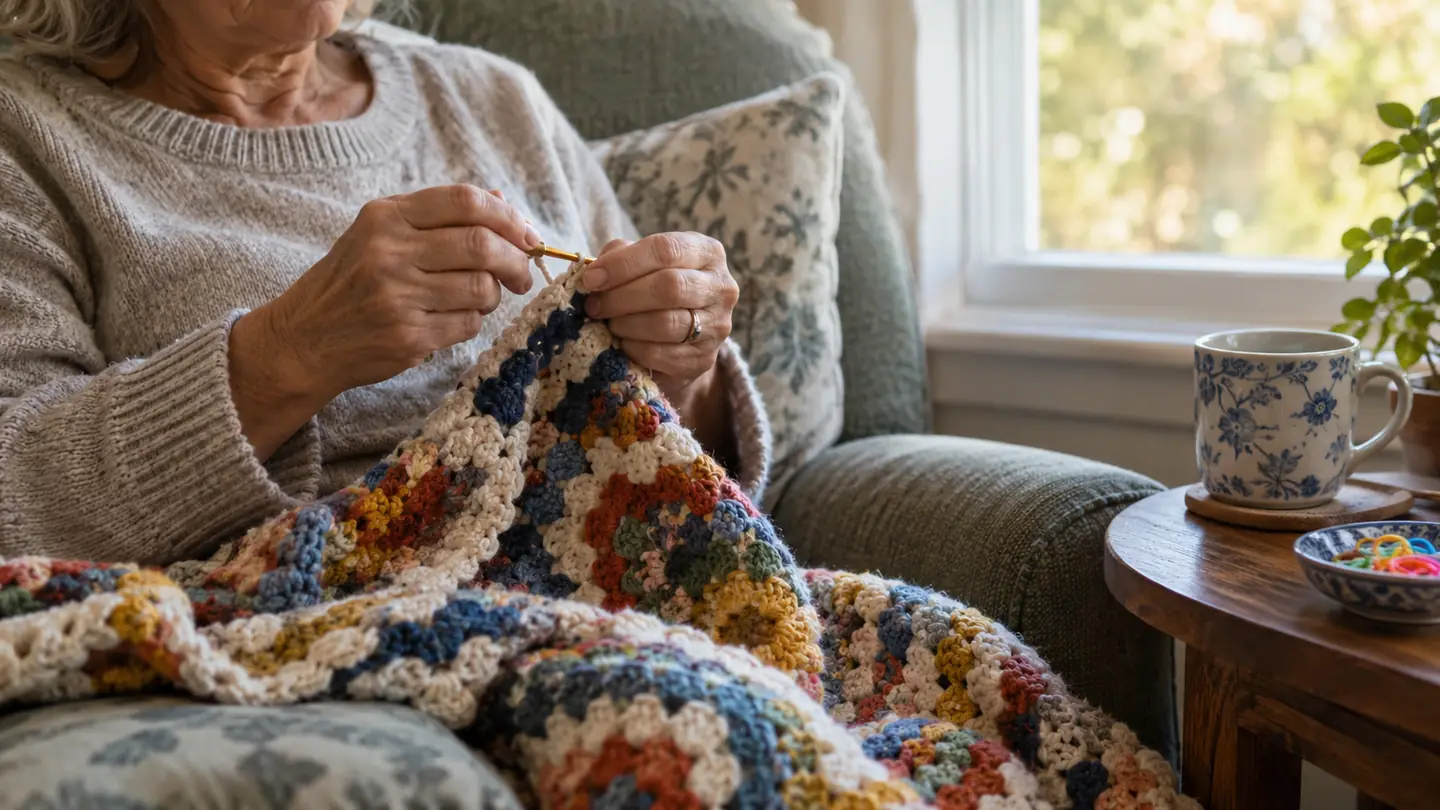
I am Delphine, and I have been crocheting for about thirty years. Most of my projects are afghans and throw blankets, with the occasional amigurumi or dishcloth for gifts. I work in an armchair by the living room window, usually in the evenings with my dog Stormy asleep nearby and my two cats, Romeo and Juliette, doing their best to steal the yarn. My right thumb has mild arthritis, so I notice anything that makes me grip harder or reposition more often.
For this comparison I used each option for two weeks of normal evening crochet. I marked repeats on a blanket, counted rows on a dishcloth, and tracked the pieces of an amigurumi animal. I also did what I always do: I tossed the project in a bag when I finished for the night, carried it to the porch, and let the cats investigate. That is where most markers fail, and it is exactly where safety pins and locking markers part ways.
| HiMo Locking Stitch Markers | Safety Pins | |
|---|---|---|
| Upfront Cost | One small pack covers years of projects | Already in most drawers, so nothing to buy |
| Security | Closed loop holds through frogging, bag tosses, and cat inspections | Open point can catch yarn and pull stitches loose |
| Ease of Moving | Clip opens and closes in seconds, even one-handed | Takes two hands and a careful angle to pin through a stitch |
| Visibility | Bright mix of colors stands out against any yarn | Silver metal disappears against light or busy yarn |
| Comfort | Smooth and light, nothing sharp near your working hand | Pointed end can snag yarn and poke fingers |
| Best For | Long projects, gifts, marking repeats | Emergency marking when you forgot your markers |
Where Locking Stitch Markers Win
The biggest difference is the closed loop. A locking stitch marker clips shut, so it stays exactly where you put it. A safety pin is open at one end, which means it can catch the yarn, snag a stitch, or work its way loose while the project sits in your bag. I lost count of how many times a safety pin slid out of a blanket between my chair and the porch. The HiMo markers stayed put through all of it, including one evening when Romeo decided the blanket was his bed.
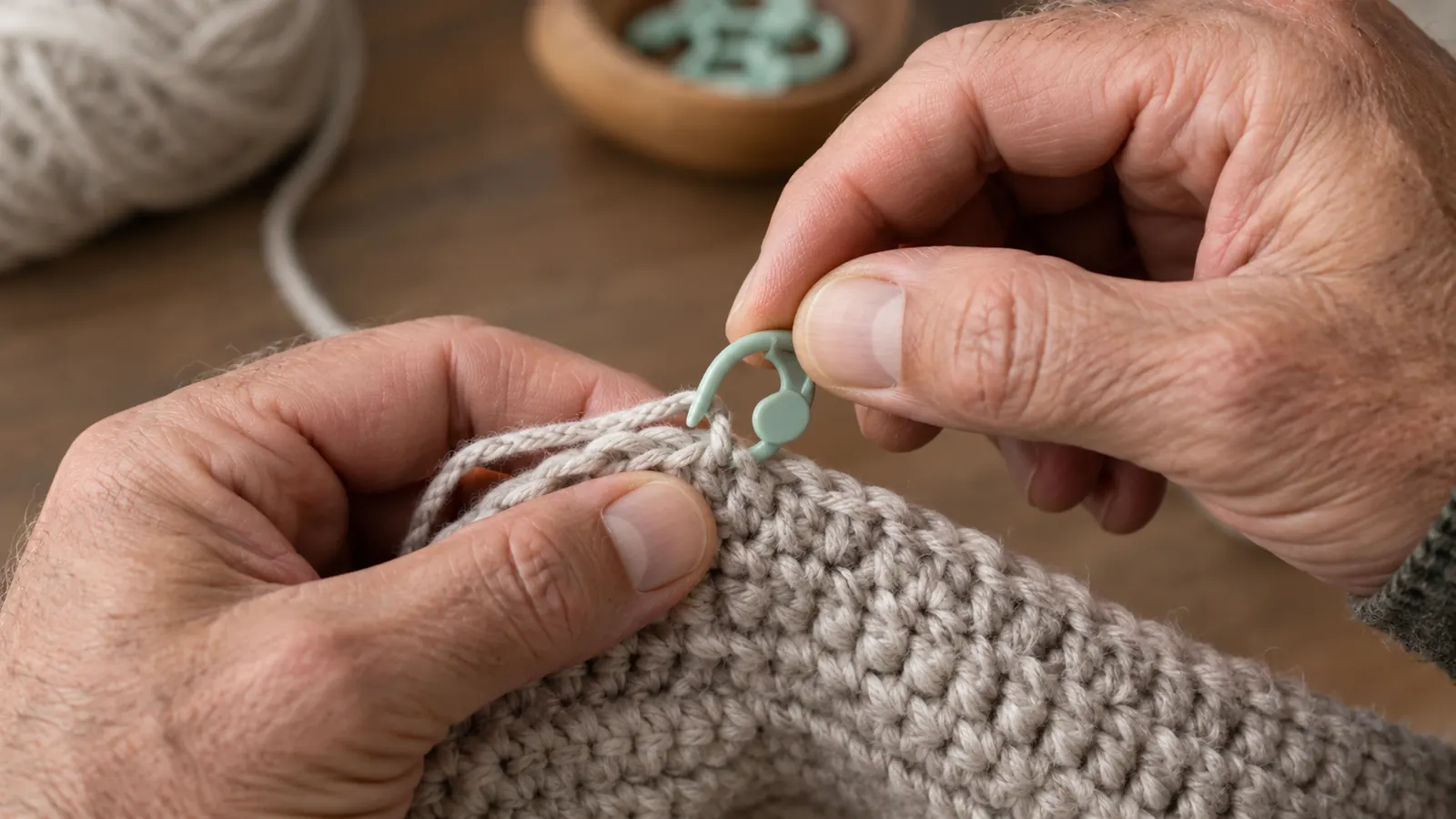
Locking markers are also easier to move. With a safety pin, you hold the project in one hand, find the point, and push it through the stitch without stabbing the yarn. With the HiMo markers, you press the little clasp, slide it onto the stitch, and let go. It takes two seconds, and you can do it without setting down your hook. That matters more than it sounds when you are marking every repeat on a blanket with several hundred stitches per row.
The third difference is visibility. The HiMo pack is a mix of colors, so the markers stand out against any yarn I own. A silver safety pin disappears into light gray yarn and busy patterns alike, which defeats the whole purpose of a marker. I also found the markers gentler on my hands. They are light and smooth, so I never had to grip them hard or worry about a sharp point near my thumb.
Where Safety Pins Win
I will be honest, because this is the part most comparisons skip. Safety pins win on cost and convenience in a pinch. If you already have a pin in the sewing box, it costs nothing and it is right there. If you are one row away from finishing and you just need to hold your place for one evening, a safety pin is completely fine. I still use one when I have to mark something in a hurry and my markers are in the other room.
Safety pins also win if you lose things easily. I have dropped more markers into couch cushions than I care to admit. A single safety pin costs nothing to lose. A whole pack is a little more annoying to misplace, even though the HiMo pack I use has one hundred pieces, so I am not worried about running out. But if losing small items drives you up the wall, one pin at a time is easier to replace than a hundred at once.
There is one more place where the pin is genuinely better: marking something you do not want to keep. If I am holding a stitch open while I decide whether to frog a row, I will grab a safety pin and not care what happens to it. Locking markers are sturdy enough to reuse for years, which is the point, but that also means I treat them more carefully. A pin I can bend and toss is the right tool for a decision I have not made yet.
After a month of evening crochet, the difference came down to one thing: a closed loop stays where you put it, and an open point finds trouble.
The markers I keep in my project bag
HiMo locking stitch markers clip shut, hold through frogging and bag rides, and show up clearly in any yarn. One pack has one hundred pieces, which is more than enough for years of blankets, gifts, and amigurumi.
Amazon Check Today's Price on Amazon →Who Should Buy Which
Buy the HiMo locking stitch markers if you crochet more than once a month, if you work on big projects with repeat patterns, or if you have ever lost your place in a row and had to frog back to find it. That last one alone is worth the switch. Frogging a few rows to fix a missed marker is the most frustrating thing I do, and locking markers all but ended it for me.
Stick with safety pins if you finish one small project a year, if you only need to hold a place for a few minutes, or if you simply do not want another small thing in your craft room. There is nothing wrong with that. The honest answer is that most of us do not need one hundred markers. But once you have them, you will reach for them every single time, and the pins will stay in the drawer where they belong.
How I Use Them in Real Projects
For a long blanket, I clip one marker at the start of each repeat section. When I reach the marker, I know the section is done, I move it up, and I keep going. For amigurumi, I use a marker to keep track of round counts, which is where I used to lose my place most often. For dishcloths, I mostly do not need them, but I keep one on the edge of the work anyway so the cats have something to ignore instead of the yarn.
The one habit that changed everything: I leave the marker in the work when I stop for the night. With a safety pin, I always took it out because I was afraid it would snag or fall out. With the HiMo markers, I clip them on, fold the project into the bag, and trust that they will still be there in the morning. They always are.
What About the Other Stitch Markers Out There?
Locking markers are not the only option. There are open rings that slide onto the needle in knitting, but they do not work well in crochet because there is no needle to hold them. There are bulb pins, which are straight pins with a colored ball on one end, and they are better than safety pins because the ball is easy to see and the point is usually blunt. But they still have an open point that can catch yarn, and they can fall out of a project that gets tossed into a bag.
For crochet, the locking style is the one that matches how the craft actually works. Crochet stitches are loops, and a marker that closes into a loop can sit on one without distorting it. The HiMo markers are small enough to leave in the work while you keep crocheting, which means you can mark a stitch you need to come back to and simply keep going. That is the whole job, and they do it better than anything else I tried.
A Few Things I Noticed Along the Way
Three small things surprised me. First, the HiMo markers are lighter than they look, so they do not weigh down the stitch or stretch the fabric. Second, the clasp is firm enough to hold through a bag ride but easy enough to open with one hand, which matters for my right thumb. Third, the mix of colors means I can use one color for repeats and another for the edge of a piece, which makes a busy pattern much easier to read.
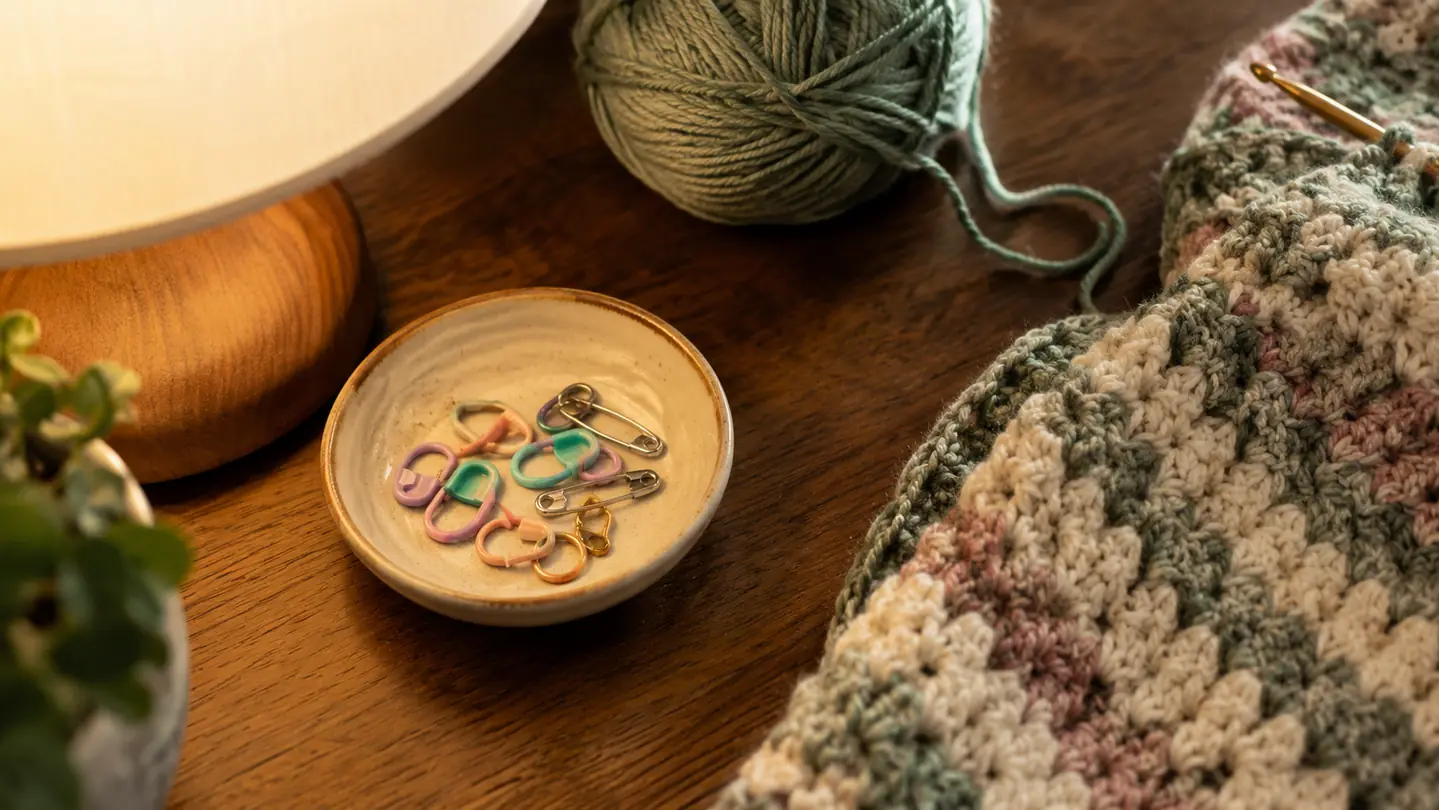
The only real downside is that they are small. I have found them in the couch, in the car, and once in the laundry basket. The cats think they are toys, so I keep the dish on the side table where Juliette cannot reach it. None of that changes my answer. For the way I crochet, locking markers beat safety pins by a wide margin.
What I'd Tell a Friend
If we were sitting in my living room with a cup of tea and a half-finished blanket between us, I would say this. Try a pack once. Use them for one project, one evening, one repeat pattern. If they do not feel better than a safety pin within that first hour, you have lost almost nothing. But I think you will feel it the first time you clip one on and keep crocheting without stopping to untangle a snagged stitch. That is the whole review.
Start your next project with markers that stay put
HiMo locking stitch markers are the ones I reach for every evening. One hundred pieces, a secure clasp, and colors that show up in any yarn. See today's price on Amazon.
Amazon Check Today's Price on Amazon →